Understanding Mitochondrial Function and Its Role in Aging
Mitochondria, often referred to as the "powerhouses of the cell," play a critical role in generating energy through the production of adenosine triphosphate (ATP). However, as we age, these essential organelles can become damaged or dysfunctional, leading to reduced energy output and an increase in harmful byproducts known as reactive oxygen species (ROS). This damage impairs mitochondrial function, creating a cycle of dysfunction that accelerates cellular aging and contributes to degenerative diseases such as neurodegeneration, cardiovascular disorders, and sarcopenia. In this article, we explore how mitochondrial function impacts aging and what emerging research suggests about maintaining healthy mitochondria.
What Are Mitochondria?
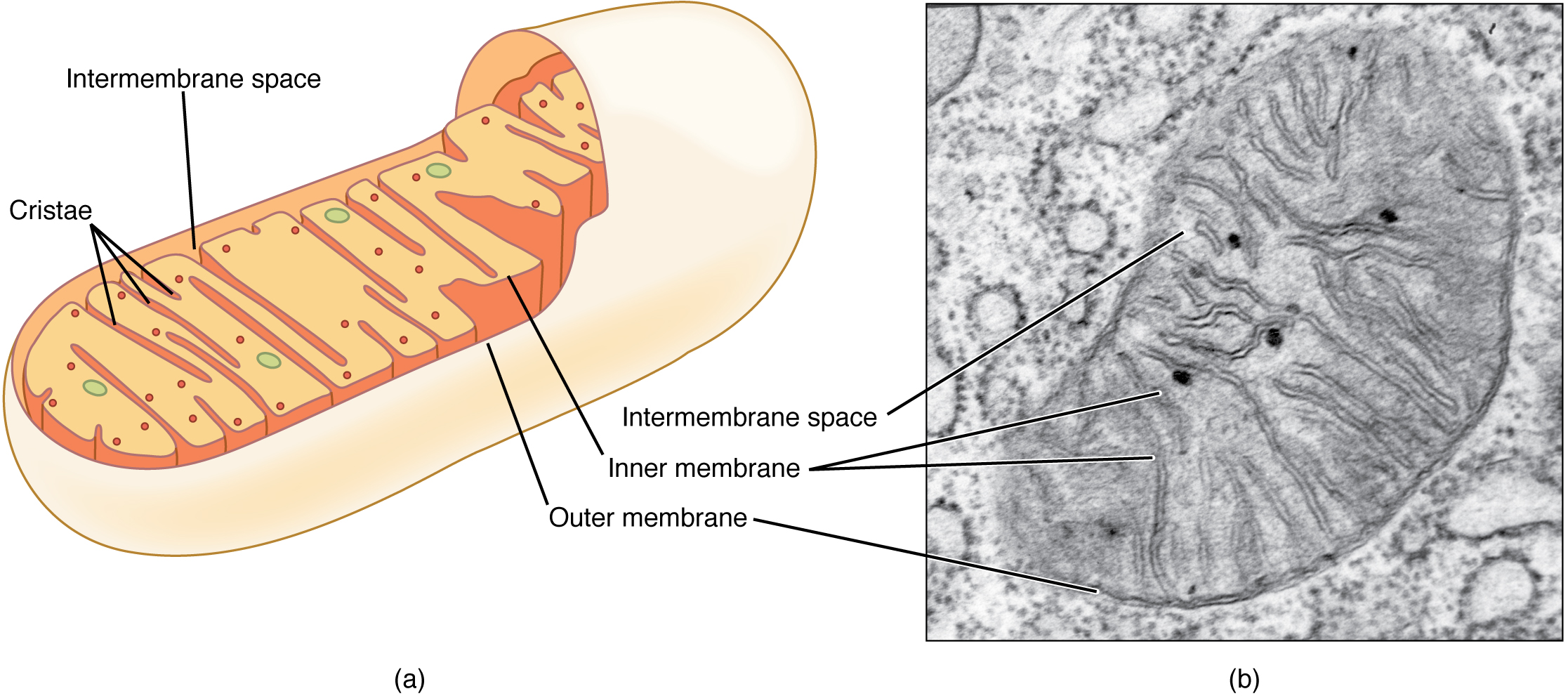
Mitochondria are small, bean-shaped structures found within most eukaryotic cells. They are responsible for producing ATP, the primary energy currency of the cell. Mitochondria also play a role in other vital processes, including calcium storage, apoptosis (programmed cell death), and the regulation of cellular metabolism. Each cell contains hundreds to thousands of mitochondria, depending on its energy demands.
Mitochondria have their own DNA (mtDNA), which is distinct from the nuclear DNA found in the cell's nucleus. Unlike nuclear DNA, mtDNA is more susceptible to damage from oxidative stress, making it a key player in the aging process.
The Role of Mitophagy in Cellular Health

One of the most important mechanisms for maintaining mitochondrial health is mitophagy, a specialized form of autophagy that targets damaged or dysfunctional mitochondria for removal. This process ensures that only healthy mitochondria remain, thereby supporting sustained energy production and minimizing the risks of oxidative damage.
Mitophagy works by identifying, tagging, and ultimately recycling defective mitochondria. When a mitochondrion becomes damaged—often due to a loss of membrane potential—it accumulates a protein called PINK1 on its outer membrane. This accumulation signals the recruitment of another protein, Parkin, which tags the mitochondrion with ubiquitin, marking it for degradation. The damaged mitochondrion is then engulfed by an autophagosome and fused with a lysosome, where it is broken down into its basic components.
How Mitochondrial Dysfunction Affects Aging

As we age, the efficiency of mitophagy declines, leading to the accumulation of damaged mitochondria. This accumulation results in increased levels of ROS, which can damage cellular components and contribute to chronic inflammation. Over time, this oxidative stress accelerates aging and increases the risk of various age-related diseases, including neurodegenerative conditions like Alzheimer’s and Parkinson’s, as well as cardiovascular diseases.
In addition to oxidative stress, mitochondrial dysfunction can lead to impaired energy production, which affects the function of high-energy-demand tissues such as the brain, heart, and muscles. This decline in mitochondrial efficiency is closely linked to the progressive loss of physical and cognitive function seen in older adults.
Urolithin A and Mitophagy

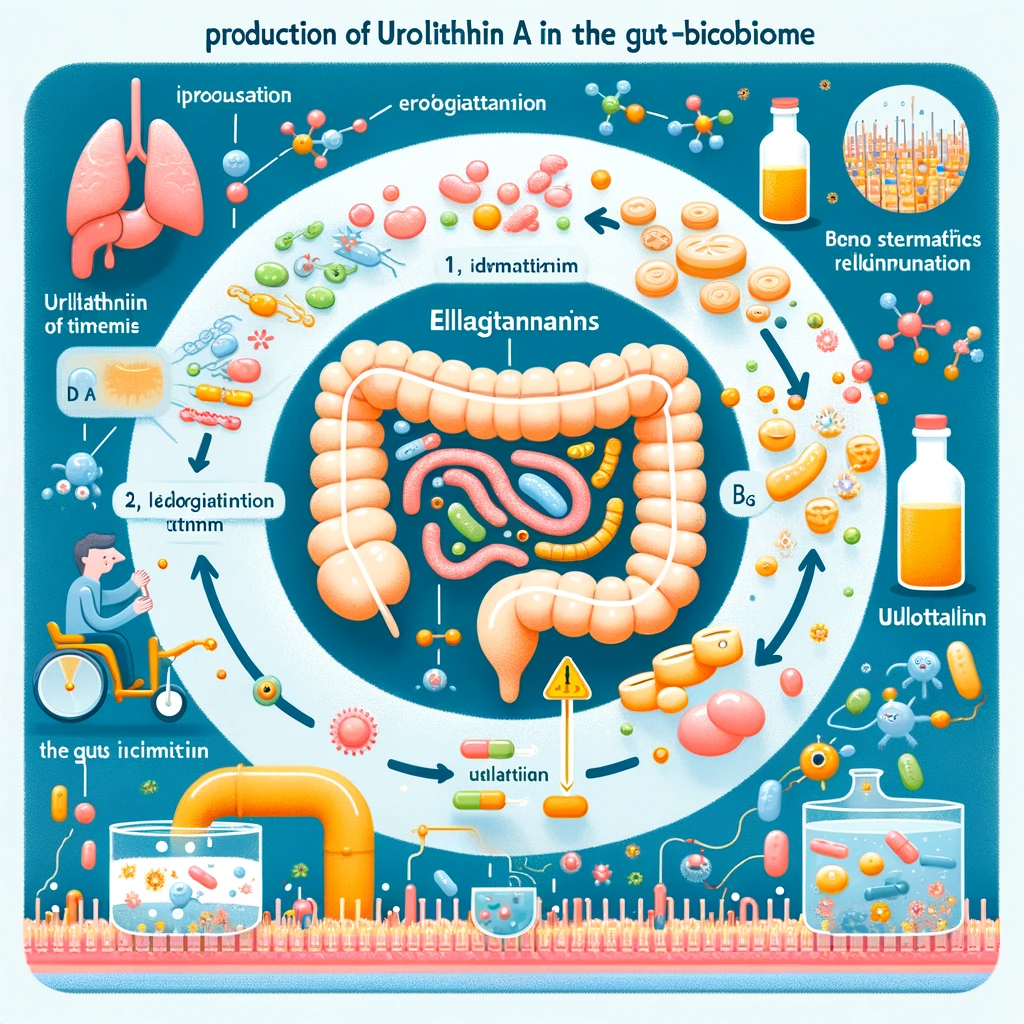
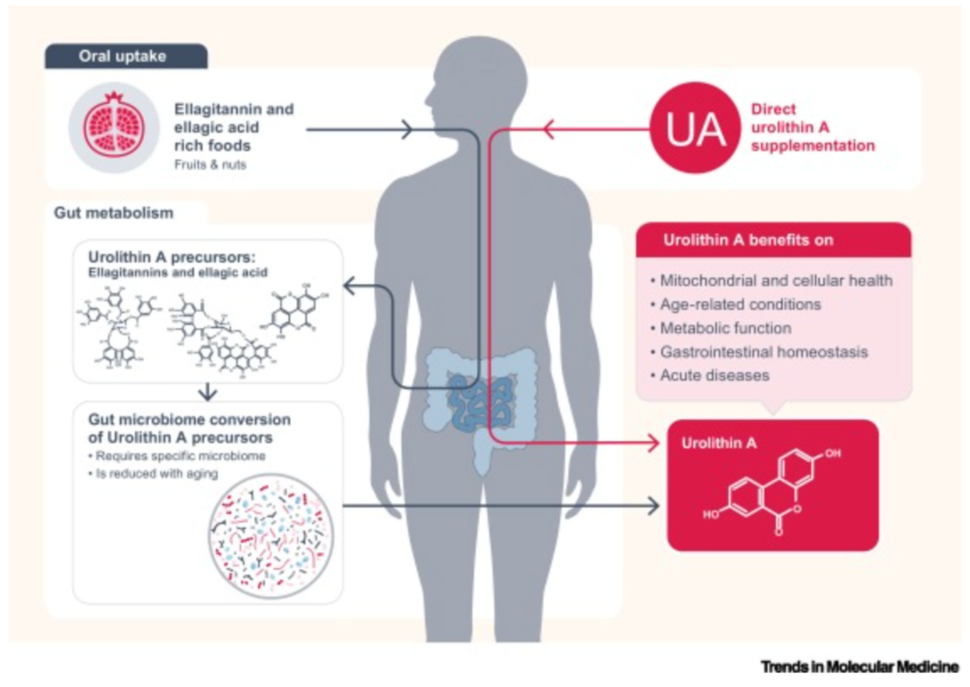
Emerging research has identified Urolithin A (UA) as a promising compound that enhances mitophagy, the process of clearing out damaged mitochondria. UA is a gut-derived metabolite produced from polyphenols found in foods like pomegranates and walnuts. It has been shown to improve mitochondrial function by promoting the selective removal of damaged mitochondria, reducing oxidative stress, and supporting healthy aging.
UA enhances mitophagy through several interconnected mechanisms:
- Activation of AMPK: UA activates AMPK, an energy sensor that helps maintain cellular energy balance. By activating AMPK, UA signals the cell to enhance mitophagy, ensuring that only healthy mitochondria remain.
- Inhibition of mTOR: UA inhibits the mTOR pathway, which is often overactive in aging cells. By dampening mTOR activity, UA allows mitophagy to proceed, helping to remove damaged mitochondria.
- Expression of Autophagy-Related Genes: UA upregulates the expression of PINK1 and Parkin, key proteins involved in the recognition and tagging of damaged mitochondria for removal.
- Formation of Autophagosomes: UA promotes the formation of autophagosomes, which envelop and isolate damaged mitochondria for degradation.
These mechanisms collectively support healthier mitochondrial function, reduce oxidative stress, and improve cellular energy production.
Clinical Evidence Supporting Urolithin A
Several clinical studies have demonstrated the benefits of Urolithin A in improving mitochondrial function and overall health. For example, a randomized trial involving middle-aged adults showed that UA supplementation significantly improved muscle strength, aerobic endurance, and markers of mitochondrial health. Participants who received 500 mg or 1,000 mg of UA daily exhibited enhanced muscle performance and reduced inflammation compared to those in the placebo group.
Another study focused on the effects of UA on metabolic health, showing that it improves insulin sensitivity and reduces liver fat accumulation. These findings suggest that UA may be beneficial for individuals at risk of metabolic disorders such as type 2 diabetes and obesity.
Urolithin A and Neuroprotection

Beyond its effects on muscle and metabolic health, UA has also shown promise in protecting against neurodegenerative diseases. Research suggests that UA enhances mitophagy in brain cells, helping to remove damaged mitochondria and reduce oxidative stress. This protective effect may help prevent or slow the progression of conditions like Alzheimer’s and Parkinson’s disease.
A study published in Nature found that UA improved mitochondrial function in mouse models of metabolic cardiomyopathy, a condition associated with obesity. The researchers observed that UA enhanced autophagy and reduced mitochondrial dysfunction, leading to improved cardiac health.
Urolithin A and Cardiovascular Health

Urolithin A has also been linked to improved cardiovascular health. A 12-week study found that daily supplementation with 50 mg of UA improved vascular endothelial function and increased gut microbiota diversity. These findings suggest that UA may have broader benefits for heart health, including reduced inflammation and improved blood vessel function.
Safety and Side Effects of Urolithin A

Urolithin A has demonstrated a strong safety profile, with minimal adverse effects reported in clinical trials. The U.S. Food and Drug Administration (FDA) has classified UA as "Generally Recognized as Safe" (GRAS) for daily doses between 250 mg and 1,000 mg. However, individual responses to UA may vary, particularly due to differences in gut microbiota composition.
Some individuals may experience mild digestive discomfort, such as bloating or gas, while others may have allergic reactions. As with any supplement, it is advisable to consult with a healthcare provider before starting UA, especially for those with existing health conditions or taking medications.
Future Directions and Research

While Urolithin A shows great promise, further research is needed to fully understand its long-term effects and optimal dosing. Ongoing studies are exploring the relationship between UA and gut microbiota, as well as its potential applications in fields such as exercise physiology, cancer therapy, and personalized medicine.
Researchers are also investigating the molecular mechanisms behind UA’s ability to enhance mitophagy, using advanced tools like MitoQC to better measure mitophagy in humans. These studies will help validate the benefits of UA and guide future clinical applications.
Conclusion
Mitochondrial function plays a crucial role in aging and overall health. As we age, the efficiency of mitophagy declines, leading to the accumulation of damaged mitochondria and increased oxidative stress. Urolithin A offers a promising approach to enhancing mitochondrial health by promoting the selective removal of damaged mitochondria and improving energy production.
With its strong safety profile and growing body of clinical evidence, Urolithin A represents a valuable tool for supporting healthy aging. As research continues to uncover its full potential, UA may become an essential component of strategies aimed at improving longevity and quality of life.

Post a Comment for "Understanding Mitochondrial Function and Its Role in Aging"
Post a Comment