Top Tricep Exercises: What Works and What Doesn't, Says a Trainer
Understanding the Triceps Brachii
The triceps brachii is a muscle with three distinct heads: the long head, lateral head, and medial head. Each of these plays a unique role in elbow extension, pressing strength, and upper arm development. The long head runs along the back of the arm and crosses the shoulder joint, making it particularly responsive to overhead movements. The lateral head contributes to the outer "horseshoe" shape of the arm and thrives under heavy pressing and close-grip work. The medial head lies beneath the other two and helps stabilize and extend the elbow, especially during lockout.
To fully develop your triceps, it's essential to train all three heads. This requires varying your grip, range of motion, and arm position. Start your workouts with compound exercises that engage multiple muscle groups, then move on to focused isolation exercises to target specific areas.
Top Triceps Exercises for Maximum Growth
Here are some of the most effective triceps exercises, ranked by their ability to overload the muscle, stimulate hypertrophy, and train each head effectively.
- Close-Grip Barbell Bench Press
This compound movement allows for heavier loads than most triceps exercises and targets the lateral and medial heads. Keep your elbows tucked and grip just inside shoulder-width to minimize shoulder strain and maximize arm tension. - Type: Compound
-
Sets/Reps: 4 sets of 5 to 8 reps
-
Overhead Dumbbell Extension (Seated or Standing)
This exercise stretches the long head of the triceps under load, creating a potent hypertrophy stimulus. The deep range of motion targets the long head more than most pushdowns or bench variations. Use a single heavy dumbbell with both hands and control the descent to protect your elbows. - Type: Isolation
-
Sets/Reps: 3 to 4 sets of 10 to 12 reps
-
Triceps Rope Pushdown (Cable)
This classic triceps move emphasizes the lateral head and allows for consistent tension across the full range of motion. Pulling the rope apart at the bottom enhances peak contraction and carves out the triceps "horseshoe." Cables also let you control tempo and stay locked into the movement without joint strain. - Type: Isolation
-
Sets/Reps: 3 to 4 sets of 12 to 15 reps
-
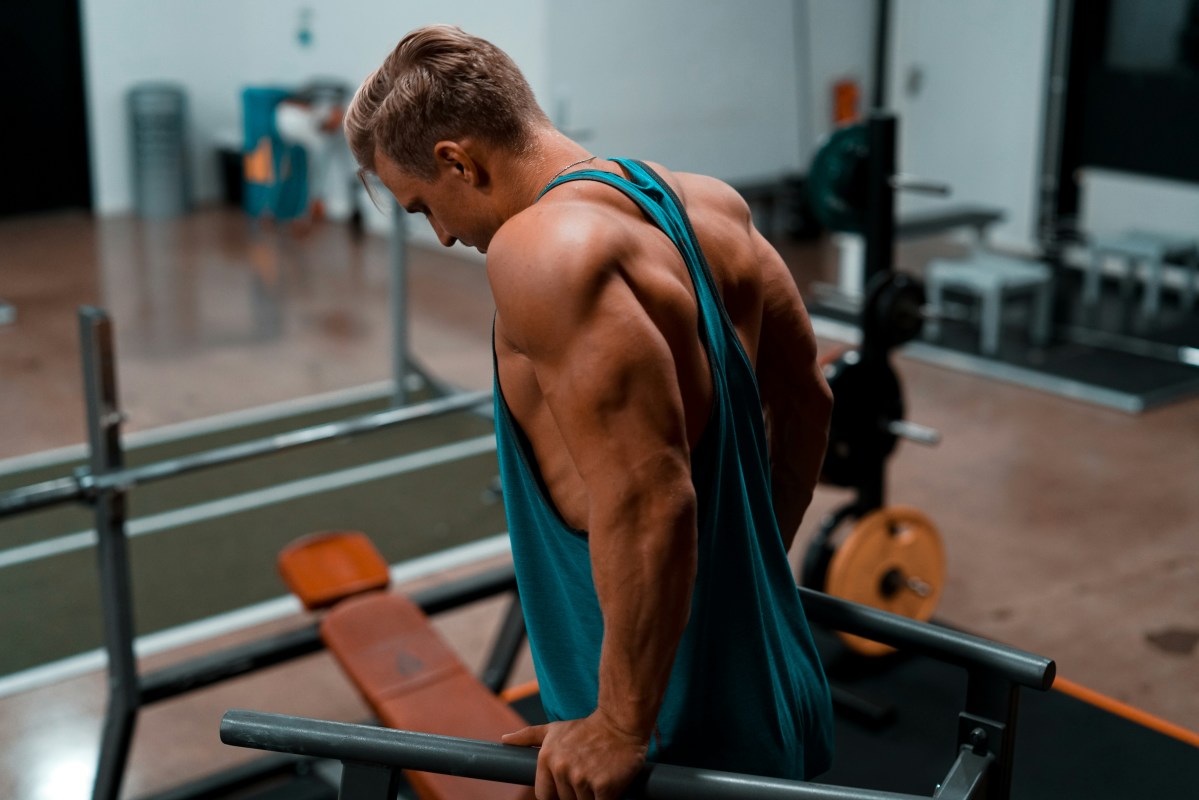
Weighted Dips (Upright Torso)
When done upright with the elbows staying close to your body, dips become a triceps-dominant powerhouse. The lateral head gets hammered, while the long head assists throughout the push. Add weight as you build strength, and focus on full lockouts at the top to engage all three heads. - Type: Compound
-
Sets/Reps: 3 sets of 6 to 10 reps
-
Cable Overhead Extension (Rope or Bar)
This variation mimics the stretch and activation of overhead dumbbell work but with constant tension from the cable. It directly targets the long head, which responds best to overhead loading. Step slightly forward and keep your elbows locked in position throughout the entire rep. - Type: Isolation
- Sets/Reps: 3 sets of 10 to 15 reps
Average Triceps Exercises
These exercises can be effective but require strict form or careful programming. Use them to complement the best movements.
- Skull Crushers (EZ-Bar or Dumbbell)
Skull crushers challenge the long head but demand strict control. Flared elbows or fast eccentrics can beat up your joints quickly. When performed slowly and with moderate weight, they help build long head thickness and triceps density. Stick with the EZ-bar to protect your wrists and elbows. - Type: Isolation
-
Sets/Reps: 3 sets of 8 to 12 reps
-
Dumbbell Kickbacks
This isolation move hits the lateral head with a solid contraction when done correctly. But it’s often rushed or performed with too much weight. To get value from it, go light, keep your upper arm fixed, and squeeze hard at the top of each rep. - Type: Isolation
-
Sets/Reps: 2 to 3 sets of 15 to 20 reps
-
Machine Dips (Assisted Dip Machine)
This gym staple makes dips more accessible, but the fixed path limits full range and shoulder positioning. It still hits the lateral and long heads decently but lacks the intensity of free dips. Use it for volume, warm-ups, or finishing sets. - Type: Compound (guided)
-
Sets/Reps: 3 sets of 10 to 15 reps
-
Single-Arm Dumbbell Overhead Extension
This movement trains the long head effectively and helps iron out strength imbalances. But it’s easy to lose control or cheat reps due to awkward arm positioning. Use this for finishing work rather than a primary builder. - Type: Isolation
- Sets/Reps: 3 sets of 12 to 15 reps
Below Average Triceps Exercises
These exercises either underdeliver, encourage bad form, or simply have better options. If you’re limited on time, skip these.
- Barbell Behind-the-Neck Press to Lockout
This old-school movement was once used to overload the long head, but the shoulder positioning puts many lifters at risk. It lacks joint safety, limits triceps activation, and has far better alternatives. - Type: Compound
-
Sets/Reps: Not recommended
-
Resistance Band Pushdowns
Resistance bands offer some tension at the bottom but very little at the top of the movement, making them ineffective for full triceps development. They're good for warm-ups or travel workouts, but not for serious growth. - Type: Isolation
-
Sets/Reps: 2 to 3 sets of 15 to 20 reps
-
Dumbbell Floor Press with Close Grip
This variation can overload the lockout but lacks full elbow extension due to the floor’s limited range. While it trains the lateral head, it doesn’t offer enough mechanical advantage or tension to be a top-tier triceps builder. - Type: Compound
- Sets/Reps: 3 sets of 8 to 12 reps
Training Tips for Bigger Arms
Your biceps may get the spotlight, but if you want arms that actually look big and powerful, your triceps need focused, intentional training. Here’s how to do it right.
-
Train Triceps Twice Per Week for Optimal Volume and Recovery
Your triceps recover quickly, especially compared to larger muscle groups like your chest or back. They can handle high frequency and moderate volume, especially when split across the week. One day can focus on heavy compound lifts (like close-grip presses or dips) for strength and size, while the second day can include more isolation work (cables, overhead extensions, kickbacks) to chase the pump and refine all three heads. Hitting triceps twice weekly gives you more quality sets, better volume distribution, and more growth stimulus. -
Train All Three Triceps Heads with Purpose
The triceps aren’t one simple muscle. They include the long head, lateral head, and medial head, each with different activation patterns. If you always do the same pushdowns or machine presses, you’re only stimulating a portion of your triceps. Use overhead movements (like seated dumbbell extensions or cable overhead extensions) to fully stretch and load the long head. Include pushdowns, dips, or kickbacks to emphasize the lateral head, especially with full elbow extension. Add close-grip presses or floor presses to activate the medial head, which helps with lockout strength and overall size. -
Start Heavy with Compounds, Then Isolate and Burn Out
Begin each triceps workout with a heavy compound movement when you’re freshest. These lifts allow you to move the most weight, recruit more muscle fibers, and build real strength and size. After that, switch to targeted isolation work like rope pushdowns, overhead extensions, or machine presses. This combo of mechanical tension (heavy lifts) and metabolic stress (pump-style work) gives you the best of both worlds. -
Chase Full Elbow Extension with Controlled Reps
The triceps extend the elbow. To fully engage them, you need to reach complete lockout on every rep, especially on pushdowns and isolation moves. Many lifters stop short and lose activation at the top where the triceps are fully shortened. Slow down your reps. Focus on squeezing your triceps hard at lockout, and avoid bouncing or rushing through sets. Controlled form leads to better fiber recruitment, safer joints, and bigger arms. -
Stretch the Long Head With Overhead Work
The long head of the triceps is the only one that crosses the shoulder joint. That means it requires a shoulder-flexed position (arms overhead) to get fully stretched and activated. Movements like overhead dumbbell extensions, cable overhead triceps extensions, or even incline skull crushers give the long head the loaded stretch it needs to grow. The stretch-under-tension principle works extremely well here, so make sure every triceps session includes at least one overhead movement.

Post a Comment for "Top Tricep Exercises: What Works and What Doesn't, Says a Trainer"
Post a Comment