Top 10 Memory Retention Techniques for Effective Studying
If you're a student, you know how frustrating it can be to study hard and still forget what you learned. The good news is that there are proven techniques to improve memory retention and make studying more effective. Whether you're preparing for exams or just trying to retain information for the long term, these strategies can help you learn better and remember more.
1. Active Recall: Test Yourself Constantly
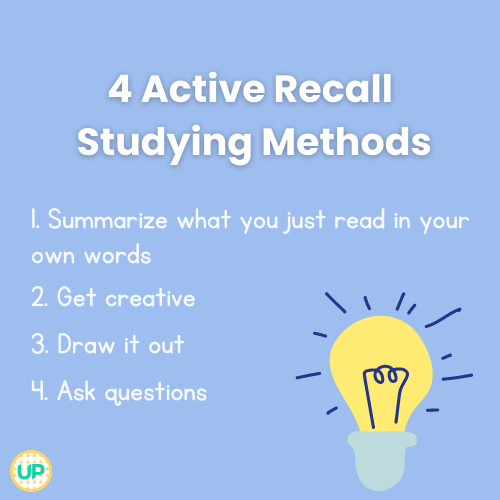
One of the most powerful study techniques confirmed by decades of research is active recall, which is the practice of retrieving information from memory rather than simply reviewing it. This method forces your brain to work harder to retrieve knowledge, which strengthens the neural pathways associated with that information.
Why it works: When you test yourself, you’re not just passively reading notes—you’re actively engaging with the material. Studies show that students who use active recall retain up to 80% of material after a week, compared to only 34% for those who use passive review methods like rereading.
How to implement active recall: - Flashcards: Write questions on one side and answers on the other. Apps like Anki or Quizlet can help automate this process. - Practice questions: After reading a chapter, close your book and write down everything you remember. - Self-quizzing: Create your own practice tests and take them without referring to notes.
Pro tip: The struggle to remember is beneficial—it's called "desirable difficulty." When retrieval feels challenging, you're building stronger memory connections.
2. Spaced Repetition: Review at Strategic Intervals
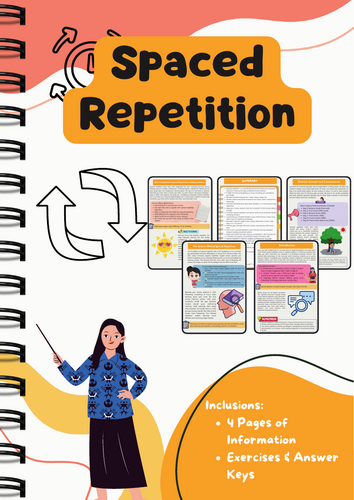
Instead of cramming all your studying into marathon sessions, spaced repetition involves reviewing material at increasing intervals over time. This technique exploits how your brain naturally consolidates memories.
Why it works: Your brain has a "forgetting curve" where newly learned information fades quickly unless reinforced. By reviewing material just as you’re about to forget it, you dramatically improve long-term retention.
The optimal spacing schedule: - Day 1: Learn the material - Day 2: First review (24 hours later) - Day 4: Second review (3 days later) - Day 11: Third review (7 days later) - Day 25: Fourth review (14 days later)
How to implement spaced repetition: - Use digital tools: Apps like Anki, Quizlet, or RemNote automatically schedule reviews based on your performance. - Create a review calendar: Schedule review sessions for each topic at increasing intervals. - Combine with active recall: Don’t just reread during reviews—test yourself.
Important: The first review within 24 hours is critical. Don’t skip it!
3. Teach Someone Else the Material

We’re used to studying as an exercise in incoming information, but flipping the switch and directing the material outward can help you learn it better and hold onto it longer. This is called the Protégé Effect, which means that you learn something better when you’re going to be expected to teach it later.
Why it works: The mere expectation of having to teach instructs your brain to organize and consolidate information more comprehensively. It’s a challenge to understand material well enough to explain it cohesively, and your brain wants to be prepared. Studies have shown that students who implement this technique perform better on tests.
How to teach back the material: - Study groups: Take turns teaching concepts to each other. If your partner doesn’t know the material, they can ask questions that might lead you to think more critically or identify gaps in your understanding. - Rubber duck method: Explain the material out loud to an inanimate object (software developers often keep a rubber duck on their desk for this purpose!). - Write explanations: Create study guides as if you’re teaching someone who’s never encountered the material. - Record yourself: Explain concepts into a voice recorder, then listen back to identify areas that need clarification.
4. Use Relational Learning: Connect New Information to What You Already Know
Put whatever you’re studying in the context of something you already know. You can connect it to something you’ve learned previously on the same subject, or you can relate it to something else entirely.
Why it works: When you make associations between new and familiar information, you create learning connections called transposition. This can be as simple as comparing one fact or set of facts to another, but the process significantly strengthens retention.
How to apply relational learning: - Compare and contrast: As you learn each new concept, think about how it’s similar or different from something you’ve already studied. - Use analogies: Relate complex concepts to everyday experiences (for example, comparing the circulatory system to a highway network). - Create concept maps: Draw connections between related ideas. - Build on prior knowledge: Explicitly ask yourself, “What does this remind me of?” or “How does this connect to what I learned last week?”
Example: When learning about different organs in anatomy class, compare each new organ to ones you’ve already studied. Note similarities in structure, function, or location. You’ll reinforce old knowledge while learning new information—double the benefit!
5. Write by Hand: Put Down the Laptop

Research consistently shows that writing notes by hand produces better learning outcomes than typing on a computer or tablet.
Why it works: When you write by hand, you’re forced to be more selective about what you record because handwriting is slower than typing. This “desirable difficulty” means you’re actively processing and summarizing information rather than transcribing verbatim. Brain imaging studies show that handwriting activates regions associated with thinking, language, and working memory more than typing does.
How to implement handwriting: - Take lecture notes by hand during class, then type them up later for better organization (this gives you two passes at the material). - Write out practice problems rather than typing solutions. - Create handwritten flashcards for important concepts. - Draw diagrams and concept maps on paper.
Bonus benefit: The act of typing up handwritten notes later provides another opportunity for active recall and review!
6. Avoid Multitasking and Cramming
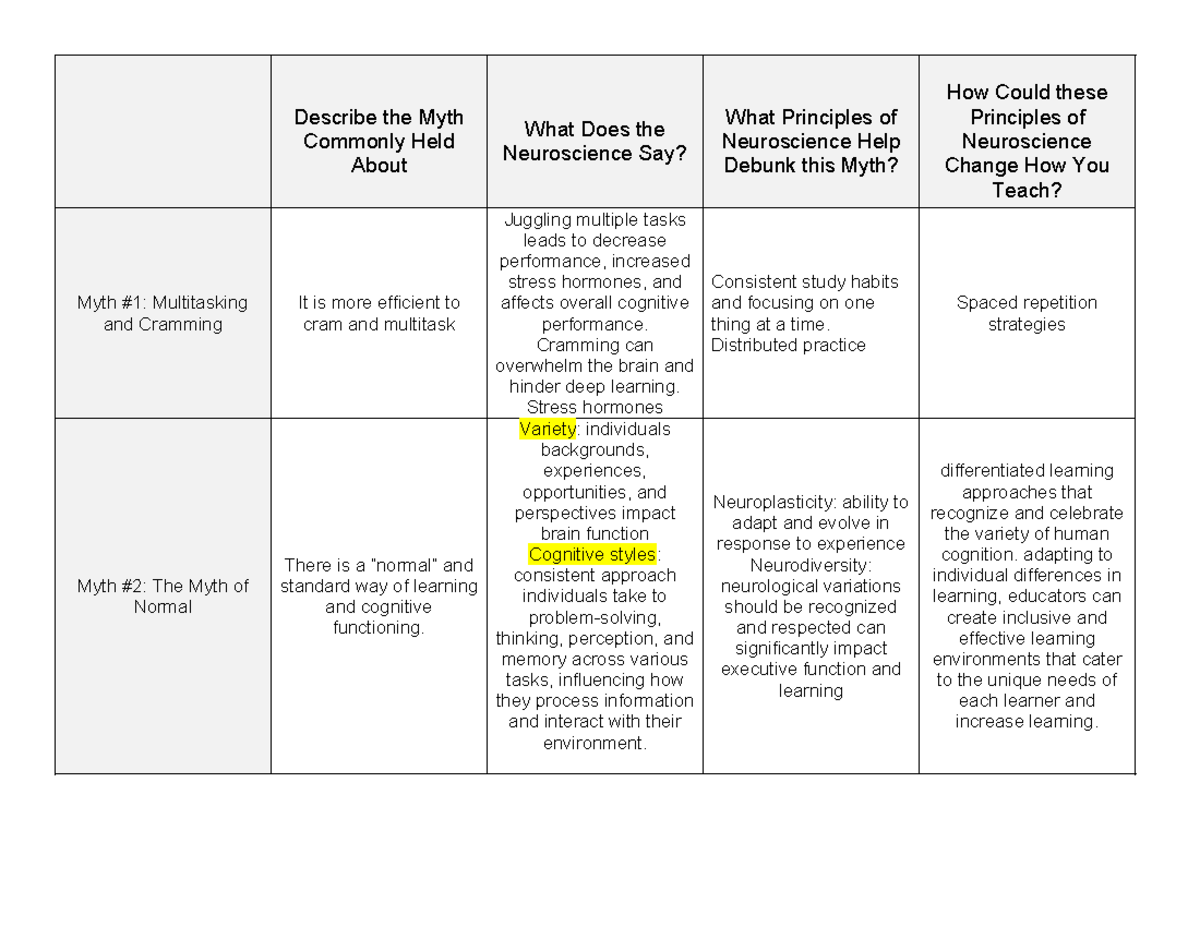
Let’s address two common but counterproductive study habits:
Multitasking Is a Myth
Think you’re a master multitasker? The truth is, multitasking is biologically impossible for focused cognitive work. What we call “multitasking” is rapid task-switching, which is inefficient and increases errors.
Instead, practice “monotasking”: - Choose one topic or exercise and truly immerse yourself. - Turn off notifications and put your phone away. - Study in blocks of focused time (try 25-50 minutes, then take a break). - Close unnecessary browser tabs and apps.
Note: This doesn’t mean you need to dedicate a full day to one subject. There’s value in studying different subjects in the same day because you’ll create connections that give you a deeper understanding. But make sure you’re sincerely moving from one subject to another, instead of constantly switching back and forth.
Avoid Cramming
The pre-exam cram might seem unavoidable, but coffee-fueled all-nighters do more harm than good.
Why cramming doesn’t work: During a cramming session, your brain is focused on the act of learning as much as the material itself. You think you’re laser-focused, but you’re splitting your attention. Additionally, your brain needs sleep to consolidate memories—staying up all night prevents this crucial process.
Think of it like exercise: If you want to run a half-marathon, you can’t train by running 26 miles the day before. You need to build stamina over time. Even if you’ve trained properly, running two half-marathons the day before the race would leave you exhausted and possibly injured.
The better approach: - Start studying weeks in advance. - Use spaced repetition to review regularly. - Get adequate sleep, especially the night before an exam. - Trust that distributed practice will serve you better than last-minute panic.
7. Use the Feynman Technique: Explain It Like You're Teaching a Child

Named after Nobel Prize-winning physicist Richard Feynman, this technique involves explaining complex concepts in simple language as if teaching a child. The process reveals gaps in understanding and forces you to organize knowledge coherently, transforming shallow knowledge into deep comprehension.
How to Apply It (4 Steps): 1. Choose a concept and write everything you know about it. 2. Explain it in simple language, avoiding jargon and technical terms. 3. Identify gaps where your explanation breaks down or becomes unclear. 4. Review source material, fill gaps, then simplify explanation further.
This technique is especially useful for mastering difficult subjects. If you can’t explain something simply, you don’t understand it well enough. Use this as your comprehension benchmark.
8. Practice the Pomodoro Technique: Focus in Short Bursts

The Pomodoro Technique structures study time into focused 25-minute intervals (called "pomodoros") followed by 5-minute breaks. After four pomodoros, take a longer 15-30 minute break. This method leverages research on attention spans and the importance of regular breaks for consolidating learning.
How to Apply It: - Set a timer for 25 minutes and work with complete focus. - Eliminate all distractions during the pomodoro. - Take a 5-minute break when the timer rings. - After 4 pomodoros (2 hours), take a 15-30 minute break. - Track completed pomodoros to measure productivity.
During breaks, completely disengage from study material. Physical movement is ideal—walk, stretch, or do light exercise to boost blood flow to the brain.
9. Use Dual Coding: Combine Visual and Verbal Information
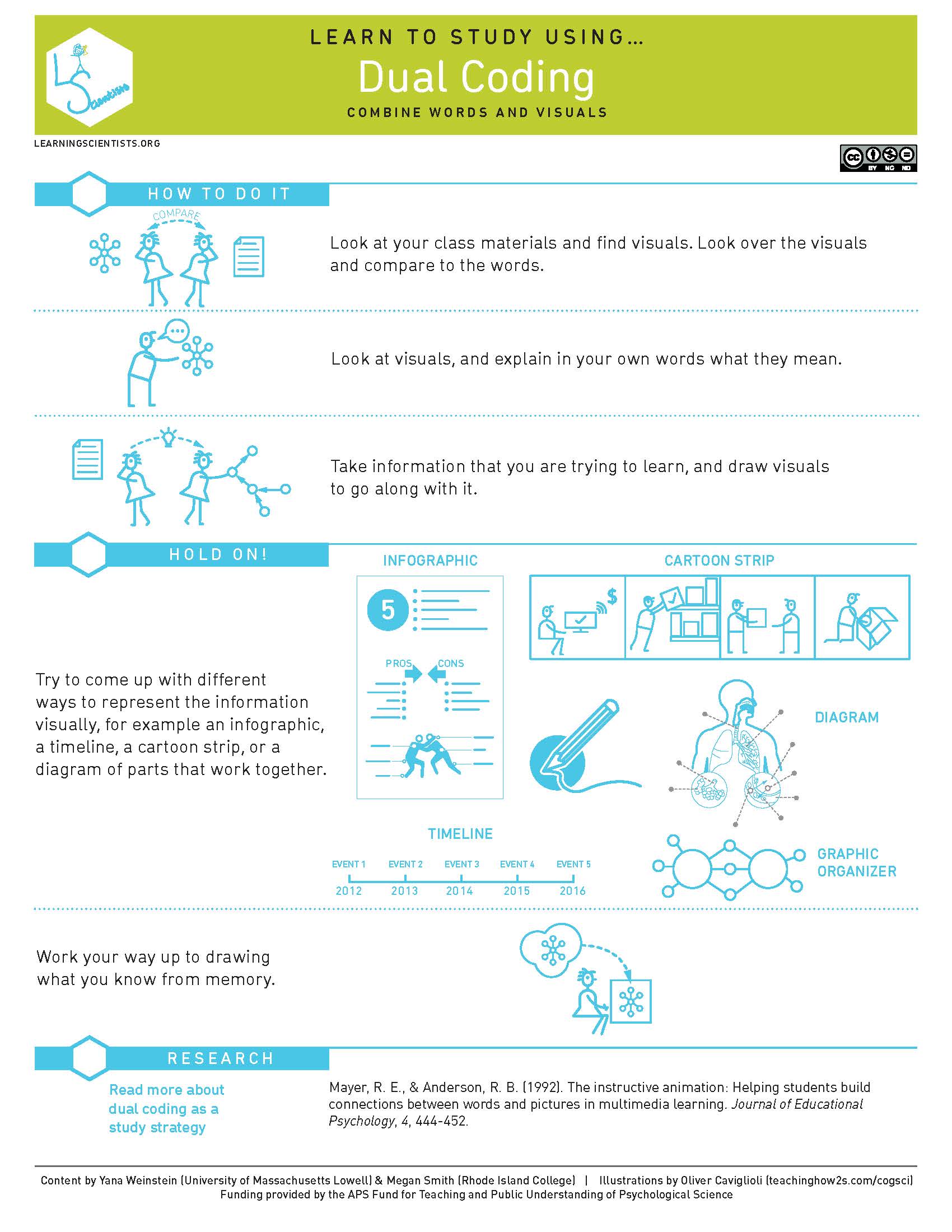
Dual coding theory states that information encoded both visually and verbally is stored in two separate memory systems, creating multiple retrieval pathways and dramatically improving recall. Combining words with images, diagrams, charts, or mind maps enhances learning beyond either method alone.
How to Apply It: - Create visual representations of concepts: diagrams, flowcharts, timelines. - Draw simple sketches next to written notes to represent key ideas. - Use mind maps to visualize relationships between concepts. - Convert data into graphs and charts for better retention. - Use color coding systematically to categorize information. - Watch educational videos, then create written summaries.
This technique accommodates different learning preferences and makes abstract concepts concrete, improving recall during high-pressure situations like exams.
10. Prioritize Sleep and Rest

Sleep plays a crucial role in memory consolidation, as it allows the brain to process and store information effectively. If you struggle to remember key concepts while studying, lack of sleep could be a contributing factor.
According to the National Sleep Foundation, adults require around 7-9 hours of sleep per night for optimal health and function. To ensure sufficient sleep, try to establish a consistent sleep pattern and aim to go to bed and wake up at the same time every day, even on weekends.
Avoid pulling all-nighters, as this can disrupt your natural sleep-wake cycle and interfere with memory consolidation. Instead, plan your study schedule in advance and allocate sufficient time for learning and revision. This way, you can avoid cramming all your studying into one session and give your brain time to rest and recuperate.
Conclusion
Improving memory retention is essential for effective studying, and the techniques outlined above provide a solid foundation for achieving this goal. From active recall and spaced repetition to the Feynman Technique and the Pomodoro Method, these strategies are backed by science and have been proven to enhance learning and retention.
By incorporating these methods into your study routine, you'll not only retain more information but also develop better study habits that will serve you throughout your academic and professional life. Remember, the best study method is one you’ll use consistently. Start with one or two of these techniques, build the habit, then add more. Small, consistent efforts compound over time into significant results.

Post a Comment for "Top 10 Memory Retention Techniques for Effective Studying"
Post a Comment