The Doctor Who Reclaimed Empathy in the Opioid Crisis
A Doctor’s Journey Through Addiction and Healing
Melody Glenn, like many young doctors, was struggling with sleep deprivation. In the late 2010s, she was juggling shifts at multiple hospitals in the Bay Area. After long nights treating emergency patients, she often found herself on the verge of dozing off while driving home to Oakland. She needed a break, something to remind her of who she was. That led her back to school, enrolling in the creative writing program at Mills College in Oakland. By 2021, she had earned her master of fine arts degree, and with it, the foundation for her first book.
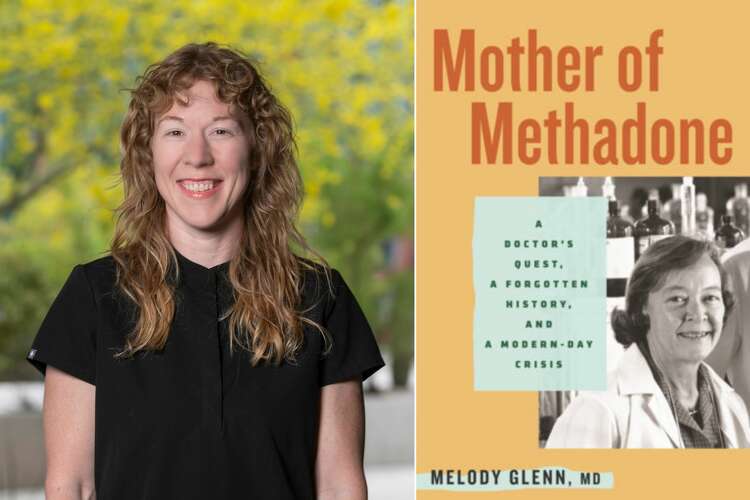
Her new book, Mother of Methadone: A Doctor's Quest, A Forgotten History, and A Modern-Day Crisis, is set to release on July 22. It blends memoir and biography, weaving together Glenn’s experiences as a physician treating drug addiction in Northern California and Arizona with the story of Dr. Marie Nyswander, a pioneering figure in addiction medicine whose work has gained renewed relevance during the current opioid crisis.
Nyswander, along with her husband and collaborator Dr. Vincent Dole, demonstrated that methadone could be an effective treatment for opioid addiction. Their groundbreaking research, published in the Journal of the American Medical Association in 1965, showed that daily methadone use could help individuals manage cravings and lead more stable lives. Glenn describes their work as "landmark," emphasizing its continued importance today.
Experts like David Courtwright, a historian who interviewed Nyswander for an oral history titled Addicts Who Survived, believe she was a crucial figure in addiction medicine. He notes that the treatment methods she co-pioneered are still applicable, yet often underutilized in addressing the opioid epidemic.
Glenn’s journey mirrors Nyswander’s in many ways. As a young doctor, she had to confront her own biases about addiction. She admits that she once unknowingly supported the stigma surrounding people who struggled with substance use. Her book begins with a candid scene from 2020, where she reflects on her resistance to prescribing methadone, even as she interviewed for a job at a methadone clinic. She questions why she and many of her colleagues held such judgments.
She attributes these views to broader societal biases and the high-stress environment of medical residencies. For doctors in emergency medicine, long hours and intense pressure can make it difficult to maintain empathy for patients with addiction. Glenn recalls how, during her residency, she often felt disconnected from those she treated, unable to give them the care they needed.
Rather than focusing solely on one drug, Glenn’s book highlights a treatment strategy known as harm reduction. This approach includes overdose prevention sites, clean syringe distribution, and accessible medications like buprenorphine and methadone, collectively referred to as MOUD. Historian Emily Dufton praised Glenn’s empathetic narrative, noting that such approaches are widely accepted in other countries but remain controversial in the U.S.
Nyswander’s life was marked by both professional achievements and personal convictions. Her mother, Dorothy Bird Nyswander, was a founder of UC Berkeley’s School of Public Health. Growing up in Alameda, Marie was exposed to radical ideas, including her involvement with the Young Communist League and efforts to support the loyalist cause in Spain during the Civil War.
In 1955, Nyswander and sociologist Charles Winick established the Narcotics Addiction Research Project, which offered psychoanalysis and group therapy to drug users. Her first book, The Drug Addict as Patient, was published the following year. Her growing influence drew the attention of the Federal Bureau of Narcotics, which monitored her work closely.
For Glenn, the parallels between her work and Nyswander’s are striking. She recounts how her long residency shifts made it harder to maintain empathy for her patients. However, by the end of her book, she is breaking Arizona law by distributing clean syringes to heroin users, a step that reflects her evolving perspective.
Viewing the world through the lens of a writer has deepened her understanding of her patients. When she listens to them, she sees their stories and what matters to them. This perspective shapes not only her medical practice but also how she documents their care.
Glenn’s journey is a powerful reminder of the intersection between medicine, storytelling, and social change. Her book offers a compelling look at the past and present of addiction treatment, and the ongoing struggle to provide compassionate care to those in need.

Post a Comment for "The Doctor Who Reclaimed Empathy in the Opioid Crisis"
Post a Comment