Sound stress increases and extends pain in mice
Understanding the Impact of Sound Stress on Pain Perception
Pain is a critical physiological response that serves as an indicator of potential harm in living organisms. While physical pain often results from tissue damage, it can also manifest as a range of unpleasant sensory and emotional experiences. This complex nature of pain has led researchers to explore how various factors, including psychological stress, influence pain responses.
Studies have shown that emotional or psychological stress can intensify pain perception. Additionally, mice housed with other mice experiencing inflammatory pain demonstrate a "bystander effect," where their sensitivity to pain increases. However, the mechanisms behind this social transmission of pain remain unclear.
The Role of Ultrasonic Vocalizations in Pain Transmission
Rodents are known to emit ultrasonic vocalizations in response to different stimuli, including pain. These high-pitched sounds are inaudible to humans but play a significant role in communication among animals. A team of researchers led by Assistant Professor Satoka Kasai from the Department of Pharmacy at Tokyo University of Science (TUS) conducted experiments to understand how these ultrasonic vocalizations affect other mice.
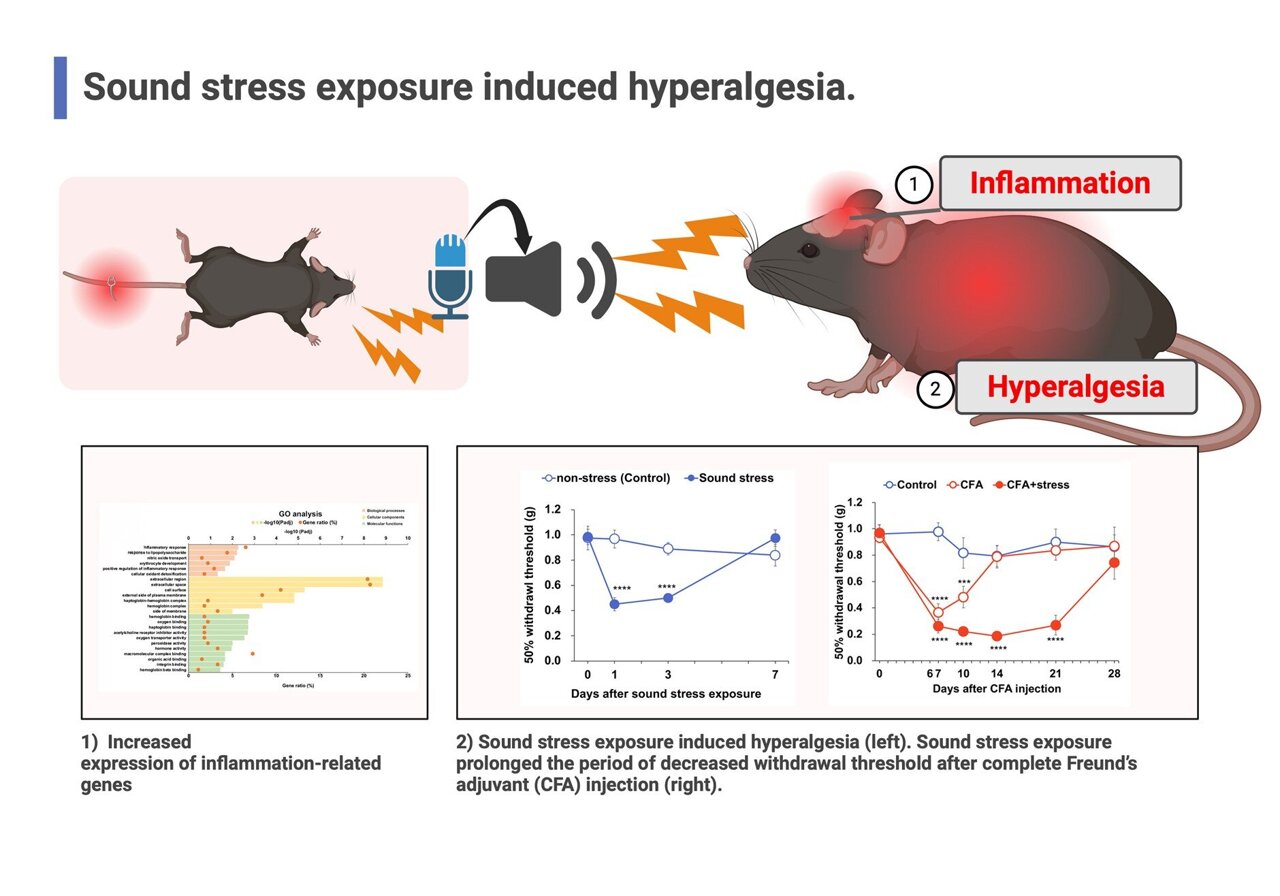
The study, published in PLOS One, explored how sound stress from ultrasonic vocalizations influences pain responses. The findings revealed that these sounds can induce emotional transmission and hyperalgesia in other mice. This means that mice can experience heightened pain sensitivity without direct injury or painful stimulation, simply by being exposed to sound stress.
Experimental Insights and Findings
In the experiments, researchers recorded and extracted ultrasonic calls from mice experiencing pain. They then exposed naïve mice to these sounds in a controlled environment, ensuring no other external stressors were present. To evaluate mechanical sensitivity, they used von Frey filaments of varying stiffness to measure the threshold at which the mice withdrew their hind paws. The results showed that exposure to sound stress significantly reduced the paw withdrawal threshold, indicating increased pain sensitivity.
To further investigate the molecular basis of this phenomenon, the researchers performed microarray analysis, which assesses gene expression. They found that sound stress exposure led to the upregulation of 444 genes and downregulation of 231 genes in brain tissue compared to controls. Notably, genes such as prostaglandin-endoperoxidase synthase 2 and C-X-C motif chemokine ligand 1 were among those affected.
Functional and molecular pathway analysis revealed that the differentially expressed genes were associated with inflammatory and lipopolysaccharide responses, as well as the tumor necrosis factor signaling pathway. These findings suggest a potential link between sound stress and the development of hyperalgesia.
Implications for Pain Management and Treatment
Treatment with anti-inflammatory agents following sound stress exposure significantly reduced pain responses. Moreover, exposure to sound stress prolonged pain in a mouse model of inflammation. Conversely, anti-inflammatory treatments helped alleviate pain exacerbated by sound stress in mice with heightened inflammation. These results confirm the connection between sound stress, inflammation, and pain.
The study highlights the importance of social and environmental factors in chronic pain and stress-related pain persistence. It suggests that sound exposure alone can lead to the transfer of social pain, emphasizing the need for medical environments free from stressful sounds that may worsen pain or hinder recovery.
Future Directions and Broader Applications
These findings open new avenues for understanding ultrasound-induced neuroinflammatory mechanisms involved in pain perception and modulation. Further research is needed to explore how different sounds reflecting various mental or emotional states affect pain responses in different brain regions.
Assistant Professor Kasai emphasizes the broader implications of the study, noting that sound stress not only induces brain inflammation leading to hyperalgesia but also exacerbates inflammatory pain and may interfere with pain-relieving treatments. The research contributes to improving the understanding of stress-related pain and could guide the development of more effective pain management strategies.
Overall, the study provides valuable insights into mental health, pain perception, and emotional empathy. It explains why some individuals might feel more pain when witnessing or hearing others in pain, highlighting the interconnectedness of social and biological factors in pain experience.

Post a Comment for "Sound stress increases and extends pain in mice"
Post a Comment