Rapid Cell-Free Platform for Nipah Virus Vaccine Development
A Breakthrough in Vaccine Development
Scientists from Cornell and Northwestern universities have made a significant advancement in the field of vaccine development. They have created a rapid, cell-free method for constructing nanoparticle vaccines that closely resemble viruses at the molecular level. This innovation presents a powerful new tool for responding to emerging pandemics, offering a faster and more adaptable approach to immunization.
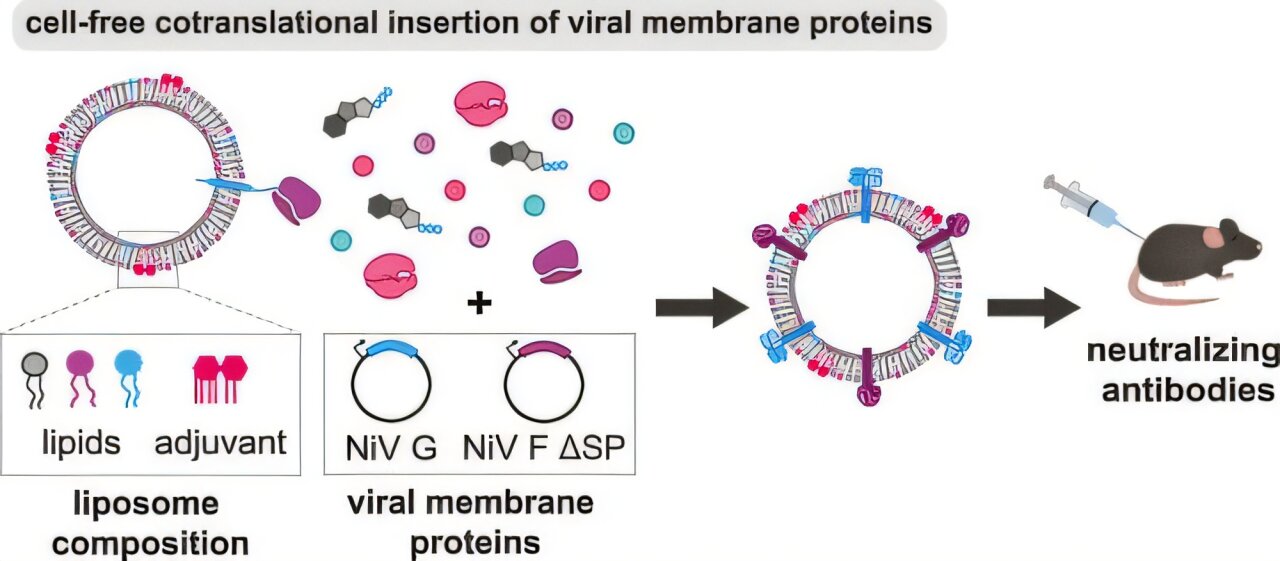
The technique involves producing and folding full-length viral membrane proteins directly into synthetic lipid bubbles known as liposomes. This process allows for the creation of vaccine candidates in just hours, rather than the weeks or months typically required by traditional methods. The breakthrough could be especially valuable in combating deadly viruses like Nipah, which has a fatality rate as high as 75% and currently lacks any approved therapies or vaccines.
Understanding the Nipah Virus
Nipah virus is a severe neurological and respiratory disease that poses a significant threat to public health. Due to its potential for widespread transmission and high mortality rate, it has been listed by the World Health Organization as one of the viruses with pandemic potential. The research team began developing this vaccine during the COVID-19 pandemic, recognizing the urgent need for more efficient vaccine development methods.
Kamat, a researcher involved in the study, highlighted the importance of being able to rapidly assemble and screen vaccine formulations. "In a sense, we were lucky with COVID-19 that a lot of research had already been done on coronaviruses," he said. "But that could easily not be the case for a future epidemic where less is known about a potential virus."
Expanding the Scope of the Platform
Beyond its application to the Nipah virus, the platform developed by the researchers could be adapted to address a wide range of viral threats. It also shows promise for therapeutic vaccines targeting conditions such as cancer. The method's simplicity and speed make it particularly appealing for global vaccine access, especially in regions with limited refrigeration and infrastructure.
The new approach eliminates the need for live cells in vaccine production, significantly reducing the time and complexity involved in developing traditional vaccines. Cell-free protein synthesis systems contain the molecular machinery from cells but operate in vitro, allowing for protein expression within a few hours. This system produces membrane proteins that can fold and insert themselves into lipid vesicles without the help of protein chaperones, which are normally required inside living cells.
Advancements in Liposome Design
By removing the need for living cells, the researchers have freed themselves from the constraints of maintaining those cells, making it possible to manufacture vaccines under simpler conditions. This translates to much faster production times and greater flexibility in vaccine design.
The team's method creates tiny fat-based bubbles called liposomes that mimic the structure of real viruses. These bubbles display key proteins from the Nipah virus on their surface, helping the immune system recognize and respond to a potential infection. In this study, researchers added two critical Nipah proteins—NiV F and NiV G—to the liposomes.
NiV F plays a role in the virus's ability to fuse with host cells, while NiV G helps it attach. To improve how these proteins are produced and inserted into the liposomes, the team removed a segment from NiV F that is unnecessary when working outside of cells. They also adjusted the types of fats in the liposome, adding ingredients like phosphatidylethanolamine and phosphatidylserine, which increased membrane flexibility and improved protein integration.
Enhancing Immune Response
To further boost the immune response, the researchers included lipid A, an ingredient known for its ability to enhance immune activation. Mice that received liposomes containing both viral proteins and lipid A produced more antibodies compared to those receiving simpler versions. Among the two proteins tested, NiV G triggered a stronger immune response, indicating its potential as a more effective component in the vaccine formulation.
Daniel, another researcher involved in the project, emphasized the advantages of the system's tailorability. "The beauty of this system and formulation approach is that we can create vaccine particles tailored with specific components that allow us to test the impact of each component on the immune response," he said. "This means we can produce vaccine particles optimized for the best performance while learning what components contribute to that success."
Future Implications
This groundbreaking research opens up new possibilities for vaccine development, offering a faster, more flexible, and adaptable approach to combating viral threats. As the world continues to face emerging infectious diseases, innovations like this could play a crucial role in protecting public health and improving global vaccine access.

Post a Comment for "Rapid Cell-Free Platform for Nipah Virus Vaccine Development"
Post a Comment