Nashport Beekeeper: BarBee Honey Production Plummets Amid 2024 Drought
The Challenges of Beekeeping in a Changing Climate
Even the most experienced beekeepers face unexpected challenges. Jack Danhauer, owner of BarBee Honey in Nashport, Ohio, and its 35 hives, is no exception. He recently got stung on his hand while working with the bees, a common occurrence for anyone in the trade. Instead of panicking, he simply removed the stinger and used smoke from his bellow to calm the hive. "Yeah, I get stinged," he admitted, a question he's often asked.
The use of smoke is a key technique in beekeeping. It helps to calm the bees by masking the alarm pheromone they release when stung, reducing the likelihood of a larger hive response. However, despite these techniques, beekeeping is not without its difficulties, especially when weather conditions affect honey production.
Danhauer learned the art of beekeeping alongside his granddaughter, Gracie Barten, after retiring from the trucking industry in 2020. He had worked in various capacities in the industry since 1980, eventually becoming the manager of a maintenance shop for Lucas Truck Sales in Zanesville. Now, he sells honey to several local retailers, including Central Ohio Tire, Phillips Meats Processing, and Susie's Favorites. His honey comes in different varieties, such as clover, wildflower, and spring honey, each with vibrant yellow hues.
"The color of the honey depends on the flowers the bees are collecting from," Danhauer explained. "Typically, the dark orange and bright orange honey is from dandelions, which are one of the first sources the bees visit."
However, this year’s weather has been particularly challenging. Late frosts disrupted the availability of some of the bees' favorite spring flowers, like tulip poplar and black locust. Additionally, the extreme drought in 2024 significantly reduced the flowering opportunities, making it harder for the bees to gather nectar and pollen. This had a direct impact on honey production and the overall health of the hives.
"When there's nothing to gather, the queen slows down and stops laying eggs," Danhauer said. "If they're not seeing anything coming in, they're not producing any brood." This lack of brood led to a decrease in the bee population, which further impacted honey production. As a result, Danhauer’s hives were reduced by 40% going into the current year.
Despite these setbacks, Danhauer remains optimistic. He is still working toward a goal of producing 1,200 pounds of honey in 2025. Each cycle of spinning honey can yield around 60 pounds if the frames are full. "It takes 500 bees visiting a million and a half flowers to make one pound of honey," he noted.
Honey has a long shelf life, so Danhauer still has product from previous seasons. "Honey will last forever. It never goes bad," he said. In late June, he had spring and clover honey available, with plans to offer buckwheat, knotweed, and wildflower honey later in the year.
Understanding the Hive Structure
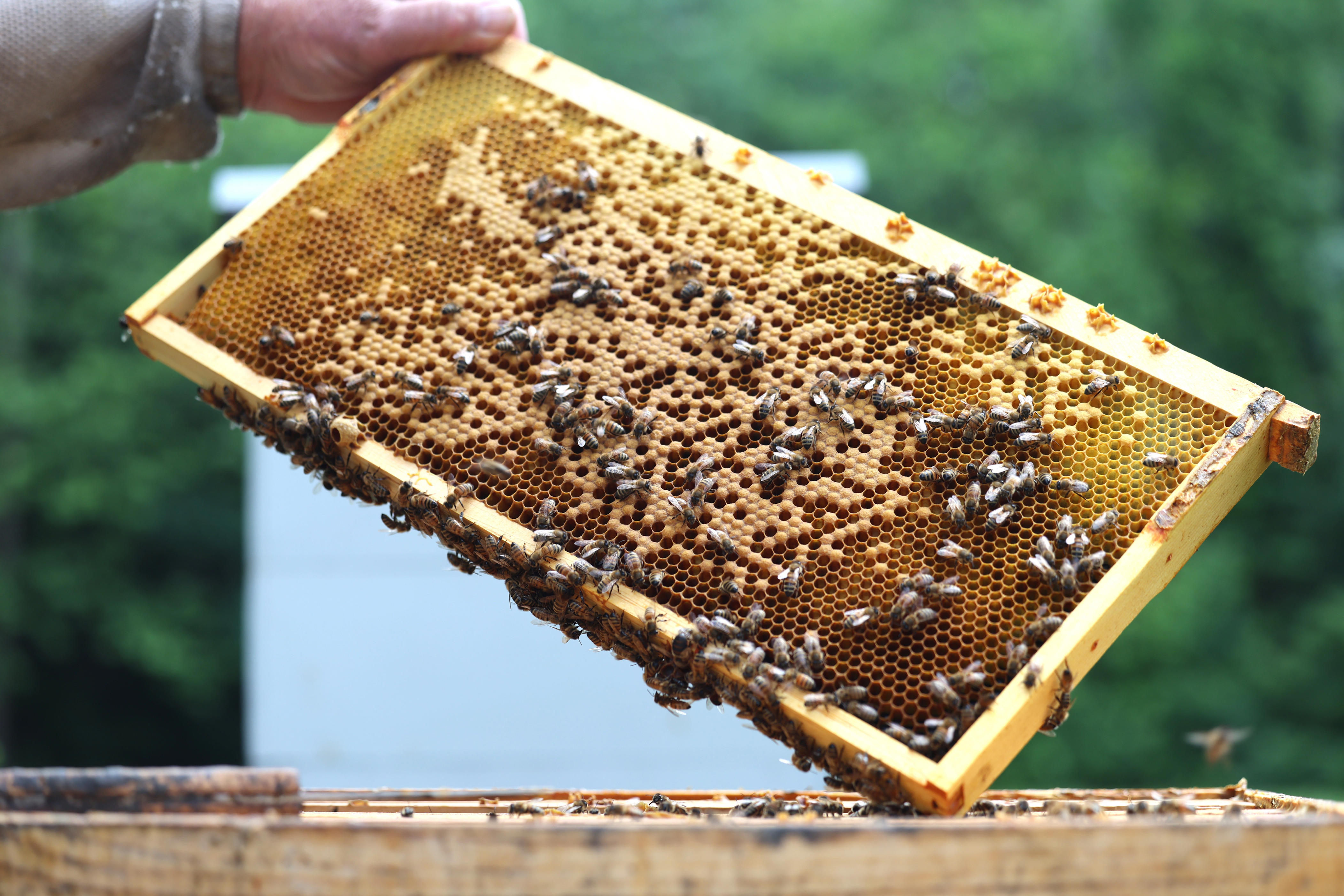
Danhauer uses the industry-standard Langstroth method for his hives. This system involves vertically stacked wooden boxes called supers, which contain frames spaced three-eighths of an inch apart. These frames are filled with hexagonal templates where the bees build their comb.
Each hive can have between 70,000 to 80,000 bees, each with specific roles. The queen is the heart of the hive, responsible for laying eggs. During the summer, she can lay between 1,500 to 2,000 eggs per day. Brood boxes are where the queen lays her eggs, and the lifecycle of a bee takes about 21 days from egg to adult.
Worker bees, which make up the majority of the hive, have a short lifespan of 42 days during the summer. They perform various tasks, including nursing larvae, defending the hive, and foraging for food. Drones, the male bees, serve two main functions: mating with the queen and consuming honey. However, they are typically expelled from the hive in the fall.
The Role of Bees in Pollination and Communication
Honeybees play a crucial role in pollination, attracted to flowering plants by their nectar. They collect nectar and mix it with their saliva to create honey. Pollen collected on their bodies is also brought back to the hive, where it is mixed with saliva to form bee bread, a protein source for larvae.
Bees are not only hardworking but also highly intelligent. They use the sun’s position to navigate and communicate through waggle dances, which convey the direction and distance of food sources. Despite their efficiency, they are not always willing to travel long distances. Studies show that bees will avoid traveling more than three miles to gather nectar, as the energy required outweighs the benefits.
Health Benefits of Bee Products
In addition to honey, other bee products like bee bread, propolis, and beeswax offer health benefits. Danhauer noted that darker honey tends to be more nutritious. BarBee Honey can be followed on Facebook or contacted at 614-371-4895 or jdan7352@gmail.com.

Post a Comment for "Nashport Beekeeper: BarBee Honey Production Plummets Amid 2024 Drought"
Post a Comment