Machine Learning-Driven Diet May Reduce Dementia Risk
A New Approach to Dementia Prevention
Dementia is a term used to describe a range of neurological conditions that cause progressive loss of memory and cognitive abilities. It affects millions of people globally, with over 55 million individuals currently living with the condition. As life expectancy increases, this number is expected to grow significantly in the coming decades.
Because effective treatments for dementia remain limited, researchers have focused on identifying factors that could help prevent or reduce the risk of developing the condition. This has led to the development of various interventions aimed at promoting brain health and reducing the likelihood of cognitive decline.
Advancing Dementia Prevention Through Machine Learning
A recent study conducted by researchers from Fudan University, Zhejiang University School of Medicine, and other institutions has introduced a groundbreaking approach to dietary intervention for dementia prevention. The new method, called MODERN (Machine-learning-assisted Optimizing Dietary intERvention against demeNtia risk), was presented in a paper published in Nature Human Behavior.
The research team, led by Professor Jintai Yu, aimed to create a data-driven dietary plan that could effectively lower the risk of dementia. Their work was motivated by the urgent need for better prevention strategies, especially given the lack of effective treatments available.
Leveraging Machine Learning for Better Outcomes
To develop MODERN, the researchers used machine learning techniques combined with large-scale health data. They specifically utilized a machine learning algorithm known as LightGBM, which was trained on dietary and health information from 185,012 participants in the UK Biobank.
Among the algorithms tested, including XGBoost and Random Forest, LightGBM showed the best performance. It achieved the highest area under the ROC curve (AUC), indicating its effectiveness in predicting dementia risk.
By analyzing the impact of different food groups, the model identified key dietary factors linked to reduced dementia risk. These insights were then translated into a practical scoring system called MODERN, which emphasizes moderate consumption of brain-healthy foods like leafy greens and berries while limiting harmful items such as sugary drinks.
Promising Results and Future Directions
MODERN has shown greater protective effects against dementia than other established dietary patterns, such as the MIND diet, which is widely recognized for its benefits in preventing neurodegeneration.
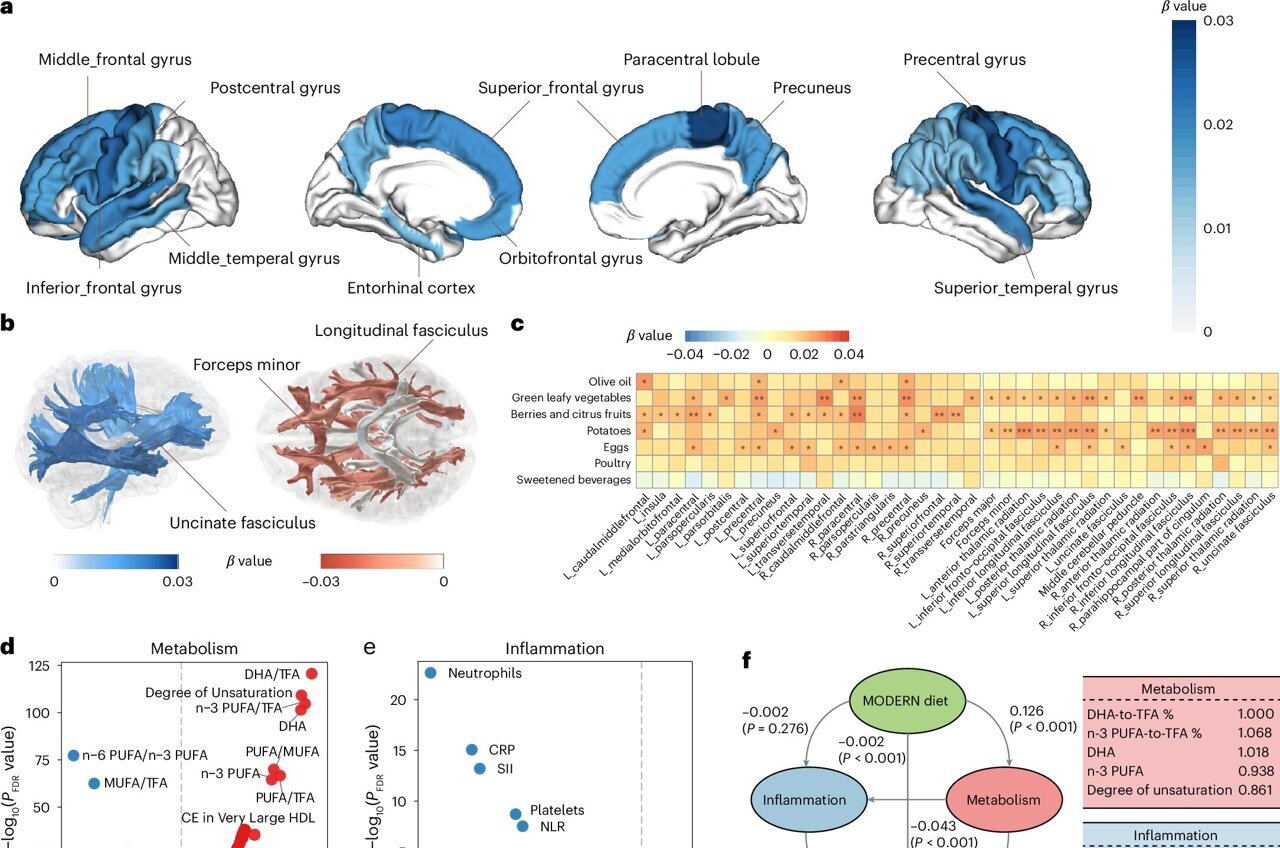
In three independent external validation studies, participants with the highest MODERN scores had a 36% lower risk of developing dementia compared to those with the lowest scores. Additional analyses suggested that the diet may improve brain structural integrity and reduce neuroinflammation, two key factors in maintaining cognitive health.
The next step for the research team is to validate the MODERN diet across diverse populations and conduct randomized controlled trials to confirm its long-term benefits. If successful, the dietary intervention could be integrated into public health guidelines and become a valuable tool in global efforts to combat dementia.
Beyond dementia, the researchers plan to apply similar data-driven methods to explore optimal diets for other brain-related conditions, such as anxiety and depression. Their ultimate goal is to establish a comprehensive, evidence-based framework for promoting brain health and preventing neurological diseases.
As the field of neuroscience continues to evolve, innovations like MODERN offer hope for a future where cognitive decline can be more effectively managed and prevented through personalized, science-backed approaches.

Post a Comment for "Machine Learning-Driven Diet May Reduce Dementia Risk"
Post a Comment