Diabetes-Induced Nerve Damage Hinders Bone Healing
Understanding the Link Between Diabetic Nerve Damage and Bone Health
Diabetes Mellitus is a chronic metabolic disorder that affects millions of people globally. It is well-known for its impact on blood sugar levels and its association with various complications, including issues with the cardiovascular system, kidneys, eyes, and nerves. While these effects are widely recognized, one less-discussed consequence of diabetes is its impact on bone health, particularly in relation to decreased bone mineral density and an increased risk of fractures.
One of the most common and debilitating complications of diabetes is diabetic peripheral neuropathy (DPN), which involves the loss of nerve fibers, impaired sensation, and pain, especially in the limbs. Recent research has highlighted another significant concern: the connection between DPN and bone degeneration. A study conducted by a team led by Dr. Aaron James from Johns Hopkins University has uncovered a direct link between nerve damage caused by diabetes and the deterioration of bone structure.
The Study and Its Findings
To explore this relationship, the researchers modeled type 2 diabetes in young male mice using a high-fat diet (HFD). These mice exhibited classic signs of metabolic dysfunction, such as weight gain, insulin resistance, and elevated blood glucose levels. In addition to these symptoms, the mice also developed neuropathy, characterized by a decrease in nerve fibers in the outer skin layer and reduced response to pain stimuli. Notably, the study found a striking loss of nerve fibers in the bones themselves.
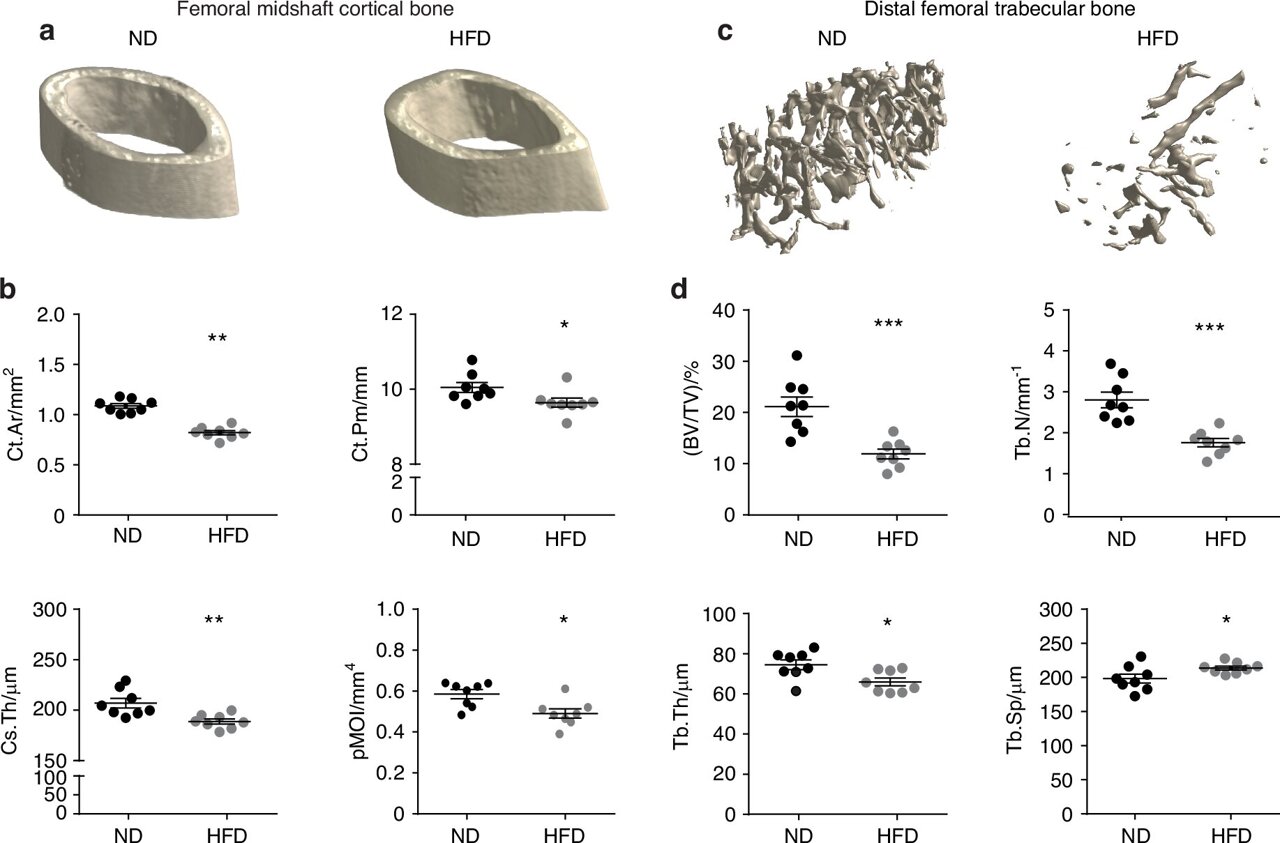
The long bones of the HFD-fed mice showed up to a 76% reduction in nerve densities. This decline was accompanied by weakened bone structure, including reduced bone volume, cortical thickness, and trabecular density. These findings suggest that nerve damage may directly contribute to bone weakness and an increased fracture risk.
Uncovering the Biological Mechanism
To understand the underlying biological mechanisms, the researchers used single-cell RNA sequencing to analyze both sensory neurons and periosteal cells—thin layers of cells surrounding the bones that play a crucial role in growth and repair. They discovered that signaling molecules such as VEGFA, BDNF, and CGRP, secreted by healthy neurons, interact with periosteal cells to promote bone formation and repair.
However, under diabetic conditions, this nerve-to-bone communication was disrupted. Instead of forming new bone, the periosteal cells began to shift towards fat cell differentiation (adipogenesis). Several key cell communication pathways involved in regulating bone formation and homeostasis were also suppressed. These pathways included WNT, TGFβ, MAPK, and mTOR signaling, which are essential for the activity of osteoblasts, osteoclasts, and osteocytes.
When periosteal cells from diabetic mice were treated with conditioned media derived from healthy sensory nerve cells, they regained their ability to develop into bone-forming cells. This treatment also reactivated the MAPK signaling pathway, highlighting the potential for restoring nerve-bone communication.
Implications for Future Research
Dr. James emphasized the significance of these findings, stating that the restoration of nerve-bone communication could be a game changer in preventing or reversing bone deterioration in people with diabetes. The study not only enhances our understanding of bone biology and nerve interactions but also opens new avenues for research beyond diabetes, particularly in exploring connections between nerve signals and conditions like osteoporosis or non-healing fractures.
Future Directions
Looking ahead, the researchers plan to investigate the effects of neuropathy under different conditions, such as age, sex, and severity of diabetes. They also aim to identify the specific factors in the conditioned media responsible for restoring bone formation, providing deeper insights into bone repair mechanisms.
This groundbreaking research highlights the complex interplay between nerve function and skeletal health, offering hope for new treatments and interventions that could improve outcomes for individuals living with diabetes.

Post a Comment for "Diabetes-Induced Nerve Damage Hinders Bone Healing"
Post a Comment