Can Solar Storms Harm Your Heart? New Study Reveals Shocking Link
Understanding the Link Between Solar Storms and Heart Health
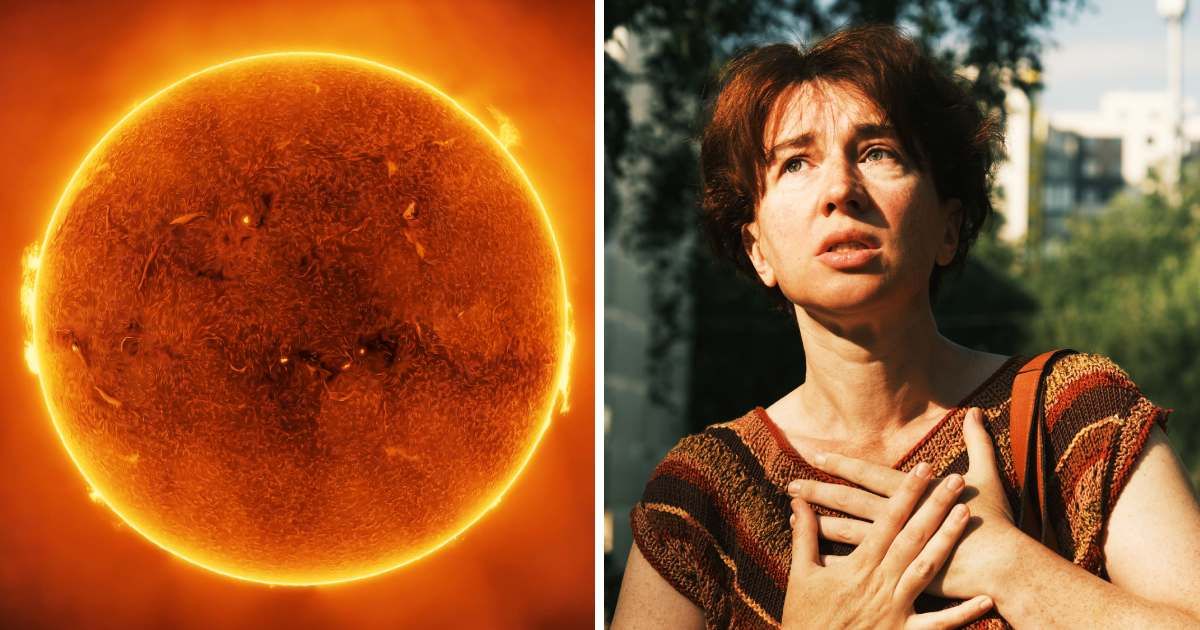
Recent research has uncovered a surprising connection between solar phenomena and human heart health. This groundbreaking study, published in Scientific Reports, highlights how changes in space weather can influence heart rate variability (HRV), a key indicator of cardiovascular well-being. The findings suggest that factors such as electromagnetic energy from the sun and the Schumann resonance power may have a measurable impact on the autonomic nervous system, which regulates vital bodily functions.
What is Heart Rate Variability (HRV)?
Heart Rate Variability (HRV) refers to the variation in time between successive heartbeats. It is an important metric used by experts to assess the balance between the sympathetic and parasympathetic branches of the autonomic nervous system (ANS). The ANS plays a critical role in regulating functions like blood pressure, breathing, and heart rate. According to Harvard Health Publishing, HRV serves as a window into the functioning of the ANS, providing insights into how the body responds to stress and environmental changes.
The Study: Monitoring Healthy Subjects
To explore this relationship, Dr. Abdullah Alabdulgader of the Prince Sultan Cardiac Center in Saudi Arabia conducted weekly 72-hour ECG sessions on 16 healthy volunteers. These sessions were compared with data collected from NASA and Finland’s Sodankylä Observatory, including hourly logs of sunspot counts, local geomagnetic indices, solar wind speeds, and cosmic ray flux. The study aimed to determine whether changes in space weather could affect HRV.
Key Findings of the Investigation
The researchers analyzed HRV across three frequency bands: very-low-frequency, low-frequency, and high-frequency. They observed that all three bands showed significant changes when cosmic ray counts, solar radio flux, and local Schumann resonance power increased. Notably, the relationship between cosmic ray counts and HRV was found to be the most dominant. HRV was enhanced for approximately 40 hours after an increase in cosmic ray activity.
Another important observation was that when solar wind power increased, participants’ heart rates also rose. Researchers believe this could be a form of biological stress response, indicating that the sympathetic nervous system (SNS) may take over under such conditions. Normally, the ANS balances the SNS and the parasympathetic nervous system (PNS), but in these cases, the SNS appeared to dominate.
Past studies have shown a synchronization between alpha brain oscillations and the peak of Schumann resonance. The dataset from this investigation suggests that HRV aligns with Schumann resonance in a similar way, at specific phases. During thunderstorms and quiet solar intervals, Schumann resonance power increases, leading to slower heart rates and a shift toward PNS dominance.
The Science Behind the Connection
Researchers propose that the interaction between charged particles from the sun and the ionosphere may be responsible for this phenomenon. This interaction affects ultra-low-frequency waves that reach Earth's surface, potentially influencing cardiac health. It is known that circadian genes, which regulate the body's 24-hour cycle, align with weak radio-frequency fields. Magnetite nanoparticles in cardiac and neural tissues may act as receptors in this alignment.
If solar phenomena indeed affect heart and brain health, medical professionals should consider incorporating space weather data into preventive care strategies. This would allow for better preparedness during periods of heightened solar activity, ensuring that individuals with pre-existing cardiac conditions receive timely treatment.
Implications for Future Research and Healthcare
This study opens new avenues for understanding how external environmental factors, such as solar activity, can influence human health. As more research is conducted, it may become possible to develop predictive models that help healthcare providers anticipate and mitigate potential risks associated with space weather. By integrating these findings into medical practices, the healthcare system can better support vulnerable populations during periods of increased solar activity.

Post a Comment for "Can Solar Storms Harm Your Heart? New Study Reveals Shocking Link"
Post a Comment