Breakthrough imaging tech reveals precise disease patterns in tissue samples
A New Breakthrough in Medical Research
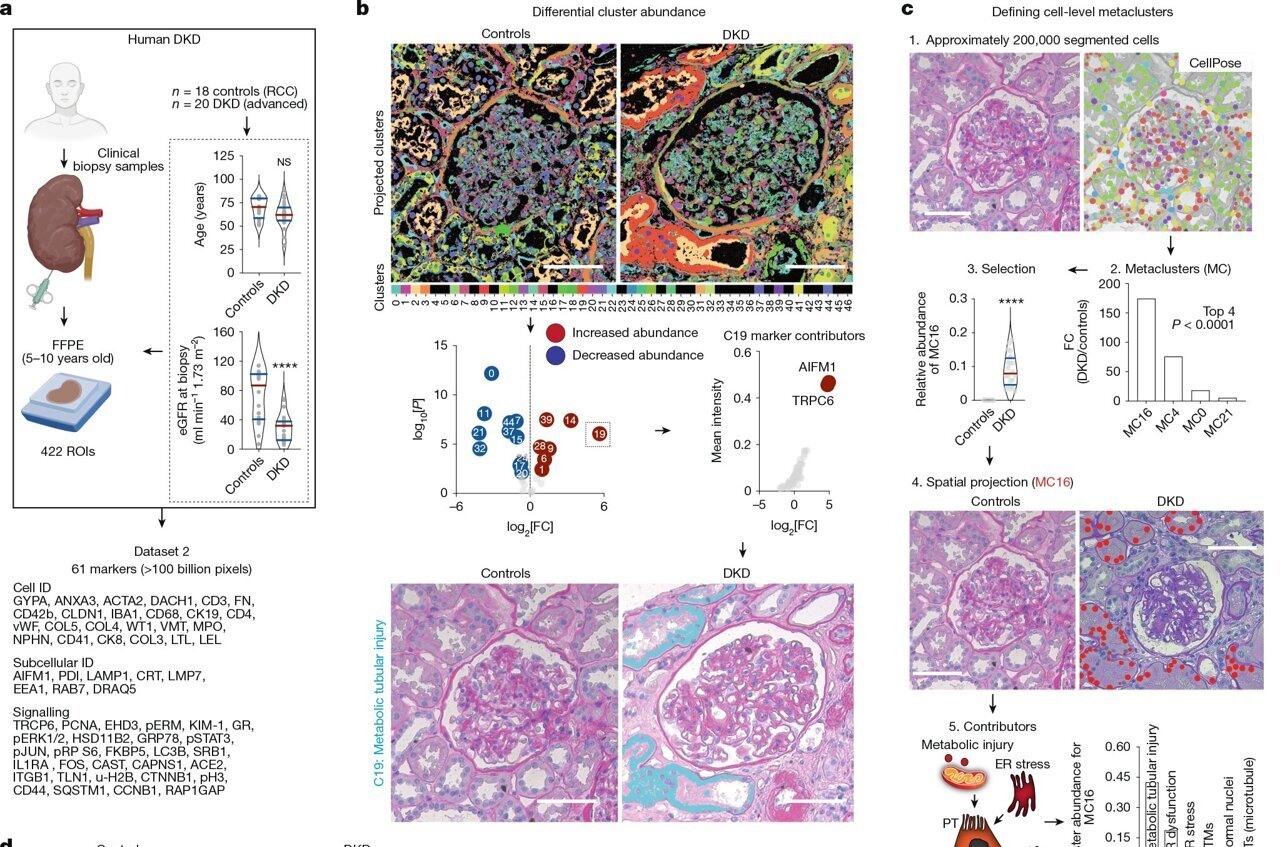
A team of researchers from Aarhus University has introduced a revolutionary technique that could significantly enhance the way doctors analyze tissue samples. This method, known as Pathology-oriented multiPlexing or PathoPlex, allows for the examination of over 100 different proteins within a single piece of tissue. This is a major advancement compared to current practices, which typically only allow for the analysis of 1-2 proteins at a time.
The technology, recently published in the journal Nature, integrates advanced image processing with machine learning to provide detailed insights into complex disease processes. According to Professor Victor Puelles from the Department of Clinical Medicine at Aarhus University, this innovation offers unique opportunities to understand human diseases and could directly impact patient care.
Detecting Changes Before Disease Becomes Visible
In their study, researchers applied the technology to specimens from patients with diabetes. They were able to identify complex disease processes that are not detectable using conventional methods. For instance, they observed how diabetes affects the kidneys through an entire network of simultaneous changes. Notably, the researchers found changes in young diabetic patients before there were clear signs of kidney disease.
This early detection capability could lead to more timely interventions and better management of chronic conditions. The ability to spot these changes before visible symptoms appear is a significant step forward in medical diagnostics.
Measuring the Effectiveness of Medication in Tissue
One of the most promising applications of PathoPlex is its ability to measure how medication works directly within tissue. The researchers tested the effects of SGLT2 inhibitors, a common type of diabetes medication, and found intriguing results. They observed that while the treatment helped with some alterations linked to diabetes, it did not address all of them. These findings raise important questions about whether diabetic patients might need additional therapies to protect their kidneys.
While more research is needed, the implications of this discovery could influence future treatment strategies and improve patient outcomes.
Open and Accessible Technology
Unlike many other research breakthroughs, the team has made their technology freely available to the public. The solution is also flexible, offering different options for small and large experiments. One of the solutions even uses a simple 3D printer as a liquid handling system. Additionally, the researchers have provided a step-by-step computational guide for image analysis, along with a Python package called "spatiomic" that is accessible to the community.
"It was important for us to provide an open solution that the entire research community could use," explains Puelles. This commitment to open science ensures that the technology can be widely adopted and further developed by researchers around the world.
Versatile Applications Across Diseases
Although the study focused on kidney diseases, the researchers believe that PathoPlex can be applied to almost all diseases where tissue examination is necessary. The team demonstrated that the technology works in liver and brain tissue, highlighting its versatility.
However, before the technology can be used in hospitals, more work is required. The researchers are focusing on developing simple solutions to fully automate the method, improving current benchmarking strategies, and identifying concrete clinical applications that can show direct benefits for patients.
Global Collaboration and Future Prospects
The study was conducted in collaboration with and co-led by researchers from Germany, Japan, France, the U.S., Australia, and Switzerland. This multidisciplinary effort across borders underscores the importance of global cooperation in advancing medical research.
As the field continues to evolve, the potential of PathoPlex to transform diagnostic practices and improve patient care is becoming increasingly evident. With ongoing research and development, this groundbreaking technology could pave the way for more effective and personalized medical treatments in the future.

Post a Comment for "Breakthrough imaging tech reveals precise disease patterns in tissue samples"
Post a Comment