AI Tool Detects Dementia Risk in Eye Exams
A New Frontier in Dementia Detection
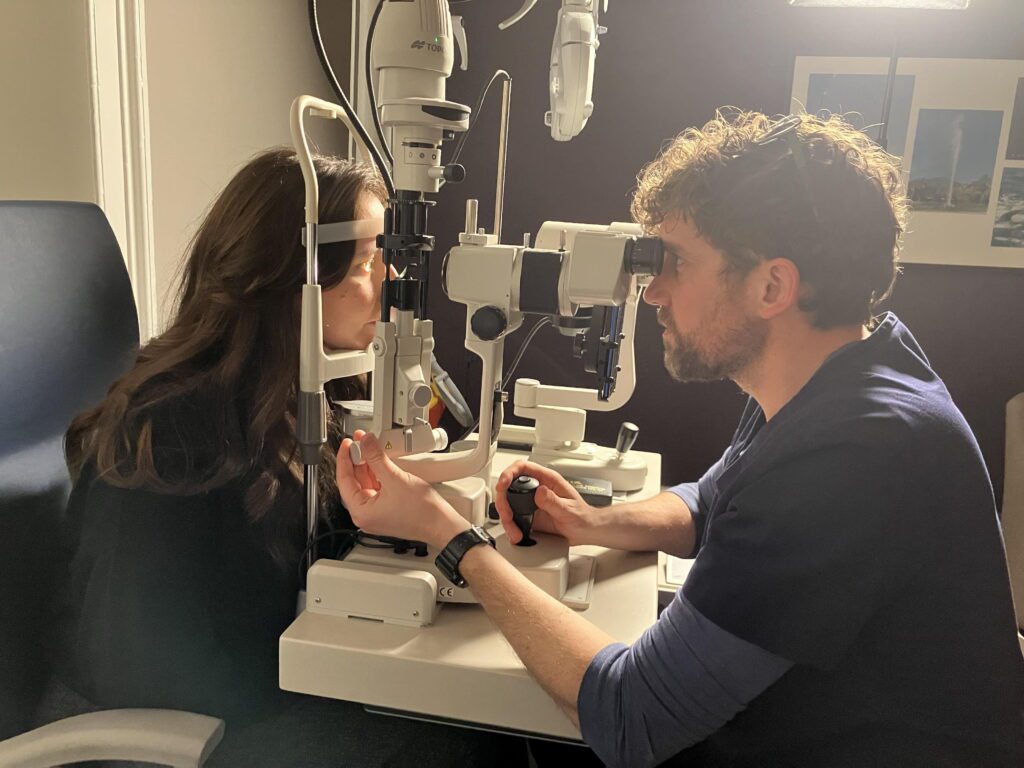
A groundbreaking AI software is set to transform how dementia is identified, by leveraging the power of eye exams conducted in high street opticians. This innovative approach is being developed by the NeurEYE research team, which has been working closely with opticians to gather over a million eye scans across Scotland. This collection forms the world’s largest dataset of its kind, paving the way for significant advancements in early dementia detection.
The project involves data scientists and clinical researchers who are using artificial intelligence and machine learning to analyze the image data. This analysis is linked with relevant patient information, including demographics, treatment history, and pre-existing conditions. The data is anonymized to ensure patient privacy, but it allows researchers to identify patterns that could indicate a person's risk of developing dementia, as well as provide insights into overall brain health.
David Steele, a retired mechanical engineer from Scotland, shared his personal experience with the challenges of dementia diagnosis. His mother was initially diagnosed with dry macular degeneration, which masked the underlying issue of cerebral blindness linked to Alzheimer’s. He emphasized the importance of early detection, stating that predictive software like this could have saved his family years of heartache and struggle.
Professor Baljean Dhillon, a Professor of Clinical Ophthalmology at the University of Edinburgh and co-lead of the NeurEYE project, highlighted the connection between the eye and the brain. She explained that the blood vessels and neural pathways of the retina and brain are closely related, making the eye an accessible window into brain health. Unlike the brain, the retina can be examined using simple and inexpensive equipment found in most high street opticians.
The use of the data has been approved by the Public Benefit and Privacy Panel for Health and Social Care, part of NHS Scotland. This initiative is supported by NEURii, a global collaboration involving several key players, including pharmaceutical company Eisai, Gates Ventures, the University of Edinburgh, medical research charity LifeArc, and the national health data science institute Health Data Research UK.
Optometrists, now commonly referred to as opticians, will be able to use the developed software as a predictive or diagnostic tool for conditions such as Alzheimer’s. It can also serve as a triage tool to refer patients to secondary health services if signs of brain disease are detected. Additionally, the software may help monitor cognitive decline over time.
Ian Cameron, an optometrist running Cameron Optometry in Edinburgh, emphasized the role of optometrists as primary caregivers. He noted that optometrists see the same patients year after year, giving them the opportunity to monitor health effectively. With the integration of AI, optometrists can detect even more health issues, making their role increasingly vital within the NHS.
Early identification of dementia risk can also accelerate the development of new treatments. By identifying individuals more likely to benefit from trials, researchers can improve the monitoring of treatment responses. According to a Lancet Commission, awareness of dementia risk can empower individuals and medical professionals to make lifestyle changes, such as increasing physical activity and improving diet, to reduce the risk.
Professor Miguel Bernabeu, a Professor of Computational Medicine at the Usher Institute and co-lead of the NeurEYE project, highlighted the potential of AI in revolutionizing medical image interpretation and disease prediction. He stressed the importance of training algorithms on representative datasets to ensure equity and reduce bias.
Dr. Dave Powell, Chief Scientific Officer at LifeArc, spoke about the potential cost savings for the NHS. He estimated that the software could save over £37 million annually by speeding up the diagnosis and treatment of neurodegenerative conditions like dementia. The UK's single healthcare provider model positions it well to lead in the development of new tests using health data.
This collaborative effort represents a significant step forward in the fight against dementia, combining cutting-edge technology with the accessibility of high street opticians to create a powerful tool for early detection and intervention.

Post a Comment for "AI Tool Detects Dementia Risk in Eye Exams"
Post a Comment