How to Create an Effective Exercise Plan for Menstrual Health
Exercise is a powerful tool for managing menstrual health, but it's not one-size-fits-all. Understanding how your body changes throughout your menstrual cycle can help you create a workout plan that supports your well-being, reduces discomfort, and enhances performance. Whether you're dealing with cramps, fatigue, or mood swings, tailoring your exercise routine to your cycle can make a world of difference.

Understanding the Menstrual Cycle and Its Impact on Exercise

The menstrual cycle is divided into four phases: menstrual, follicular, ovulation, and luteal. Each phase brings unique hormonal fluctuations that affect energy levels, strength, and overall physical comfort. For example, during the menstrual phase, estrogen and progesterone levels drop, which can lead to fatigue and lower energy. In contrast, the ovulation phase is often marked by increased energy and strength due to rising estrogen levels.
This means that what works for you during one phase might not be ideal for another. By aligning your workouts with your cycle, you can optimize results while avoiding unnecessary strain.
Why Exercise Matters for Menstrual Health

Exercise offers numerous benefits for menstrual health, including:
- Reducing cramps and bloating: Physical activity increases blood flow and releases endorphins, which act as natural painkillers.
- Improving mood: Exercise boosts serotonin and dopamine, helping to manage PMS symptoms like irritability and anxiety.
- Regulating hormones: Regular, moderate exercise helps balance estrogen and progesterone, leading to more predictable periods and fewer PMS symptoms.
- Enhancing energy levels: Even light exercise can combat fatigue and keep you feeling more active throughout your cycle.
However, it's important to avoid overtraining, as excessive exercise without proper nutrition can disrupt your cycle and lead to missed or irregular periods.
Tailoring Your Workout Plan to Each Phase of Your Cycle
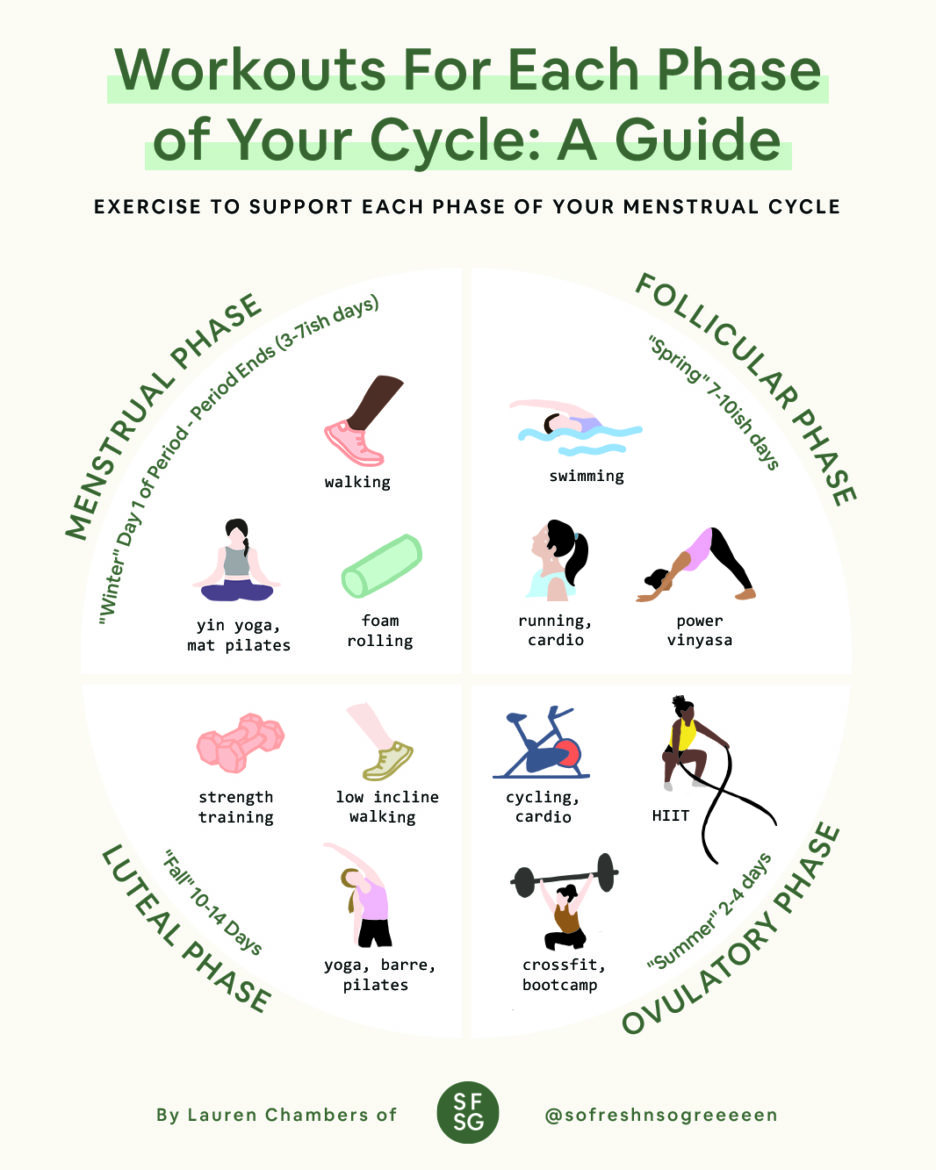
Creating an effective exercise plan requires understanding how your body responds during each phase. Here’s a breakdown of what to focus on during each stage:
1. Menstrual Phase (Days 1–5)
During this time, many women experience fatigue, cramping, and lower energy levels. Focus on gentle, restorative movements that promote relaxation and reduce discomfort.
- Recommended Activities:
- Gentle yoga (e.g., Child’s pose, Reclining Bound Angle)
- Light walking or cycling
- Stretching routines
- Pilates for core stability
- Deep breathing or meditation
Avoid high-intensity workouts, heavy lifting, or anything that feels too strenuous.
2. Follicular Phase (Days 6–14)

As estrogen levels rise, so does your energy. This is a great time to incorporate cardio and strength training to build endurance and strength.
- Recommended Activities:
- Running or jogging
- Cycling
- High-intensity interval training (HIIT)
- Strength training (squats, lunges, push-ups)
- Dance or aerobics classes
- Hiking or swimming
This phase is ideal for pushing yourself a bit harder, but still listen to your body and adjust intensity as needed.
3. Ovulation Phase (Days 15–17)
With peak estrogen levels, this is the best time for high-intensity workouts. You’ll likely feel stronger and more energized.
- Recommended Activities:
- Heavy lifting (deadlifts, bench press)
- Sprint intervals
- Olympic lifts (clean and jerk, snatch)
- Circuit training
- Sports like soccer or basketball
- Power yoga
Take advantage of your heightened energy to challenge yourself and maximize performance.
4. Luteal Phase (Days 18–28)

As progesterone rises, many women experience fatigue, cravings, and mood swings. Focus on low-impact, recovery-based activities.
- Recommended Activities:
- Gentle yoga or Pilates
- Brisk walking
- Light resistance training (bodyweight squats, seated rows)
- Stretching and foam rolling
- Swimming or water aerobics
Prioritize rest and recovery to support your body through the final phase of your cycle.
Tips for Successful Cycle-Synced Workouts
Creating a cycle-synced exercise plan isn’t just about following a rigid schedule—it’s about listening to your body and adjusting as needed. Here are some practical tips to help you get started:
- Track your cycle: Use a period tracking app or calendar to identify patterns and plan your workouts accordingly.
- Start slow: If you’re new to cycle syncing, begin with small adjustments and gradually build up.
- Mix it up: Vary your workouts to keep things interesting and prevent burnout.
- Stay hydrated: Drink plenty of water, especially during intense workouts.
- Fuel your body: Eat nutrient-dense foods that support your energy levels and recovery.
- Rest when needed: Don’t force yourself to work out if you’re feeling overly tired or unwell.
Addressing Common Myths About Exercise During Your Period

There are many misconceptions about working out during menstruation. Here are a few common myths and the truth behind them:
-
Myth: You should avoid all exercise during your period.
Truth: Light to moderate exercise can actually help reduce cramps and improve mood. -
Myth: Exercise causes irregular periods.
Truth: Only excessive training without proper nutrition can disrupt your cycle. Balanced exercise supports regularity. -
Myth: You burn more calories during your period.
Truth: While some studies suggest minor variations in metabolism, there’s no consistent evidence that you burn significantly more calories during your period.
Final Thoughts

Creating an effective exercise plan for menstrual health is about understanding your body and adapting your routine to match your cycle. By aligning your workouts with hormonal changes, you can reduce discomfort, boost energy, and improve overall well-being.
Remember, every woman’s body is different, so what works for one person may not work for another. The key is to stay flexible, listen to your body, and find a routine that supports your health and happiness.
Whether you're practicing gentle yoga during your period or pushing your limits during ovulation, the goal is to move in a way that feels good and sustains your long-term wellness.
Post a Comment for "How to Create an Effective Exercise Plan for Menstrual Health"
Post a Comment