Top Advanced Focus Training Methods to Boost Mental Clarity and Productivity
In a world filled with constant distractions, the ability to maintain focus has become a rare and valuable skill. Whether you're a student, a professional, or someone looking to improve your daily productivity, advanced focus training methods can help you unlock your full potential. These techniques are rooted in neuroscience and cognitive psychology, offering practical strategies that can be applied to enhance mental clarity and efficiency.
This article will explore cutting-edge approaches to improving focus, including selective attention training, working memory enhancement, mindfulness practices, and environmental optimization. You'll also discover how to measure your progress and integrate these methods into your daily routine for long-term success.
The Science Behind Sustained Attention

Focus is not just about willpower—it's a complex cognitive process involving multiple neural networks in the brain. According to research by cognitive neuroscientist Michael Posner, there are three key attention networks: the alerting network (maintaining vigilance), the orienting network (directing attention to specific locations), and the executive network (resolving conflicts and controlling attention). Understanding these mechanisms allows us to train our focus with the same precision as athletes develop physical skills.
Studies show that knowledge workers switch tasks every 3 minutes and 5 seconds, leading to increased error rates and reduced productivity. However, scientific research also provides validated solutions for rebuilding and strengthening our capacity for sustained concentration. By leveraging evidence-based techniques, we can significantly improve our ability to stay focused and productive.
Foundational Focus Training Techniques
To build a strong foundation for improved focus, it’s essential to start with foundational techniques that target different aspects of attention. Here are some effective methods:
1. Selective Attention Training
Selective attention—the ability to focus on relevant information while ignoring distractions—can be systematically improved through targeted exercises. Practical training exercises include:
- Single-Point Focus: Concentrate on a specific visual point for increasing durations (start with 30 seconds, build to 5 minutes).
- Auditory Discrimination: Focus on one conversation in a noisy environment while tracking specific words or phrases.
- Counting Meditation: Count breaths from 1 to 10, starting over when you lose count or reach 10.
- Reading in Distraction: Practice reading complex material while background noise or visual distractions are present.
These exercises help train your brain to filter out irrelevant stimuli and maintain focus even in challenging environments.
2. Working Memory Enhancement
Working memory—our ability to hold and manipulate information in consciousness—is strongly correlated with focus capacity. Research by Dr. Susanne Jaeggi at the University of California, Irvine shows that working memory training can transfer to improved performance on unrelated cognitive tasks. The dual n-back task, in particular, has been extensively studied and validated as an effective working memory training protocol.
3. Mindfulness-Based Attention Training
Mindfulness meditation represents one of the most well-researched approaches to attention training. Studies by Britta Hölzel and colleagues, including Sara Lazar at Massachusetts General Hospital, demonstrate that just 8 weeks of mindfulness training can produce measurable changes in brain structure, including increased gray matter density in regions associated with attention and sensory processing.
Evidence-based mindfulness protocols include:
- Focused Attention Meditation: 10–20 minutes daily focusing on breath, returning attention when it wanders.
- Open Monitoring: Observing thoughts and sensations without judgment or engagement.
- Body Scan Practice: Systematic attention to different body regions to develop sustained focus.
- Walking Meditation: Maintaining attention on physical sensations during slow, deliberate movement.
Environmental and Cognitive Load Optimization
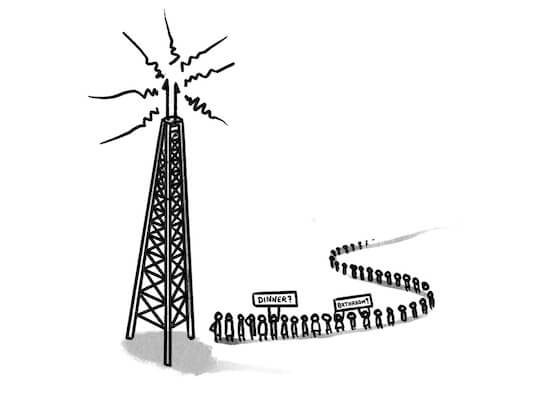
Understanding cognitive load theory is crucial for optimizing focus. Cognitive Load Theory, developed by John Sweller, identifies three types of mental processing: intrinsic load (essential task complexity), extraneous load (poor design or distractions), and germane load (building mental models). Focus optimization requires minimizing extraneous load while managing intrinsic load appropriately.
Here are some strategies to reduce cognitive load:
- Single-Tasking Protocol: Eliminate all secondary tasks during focus periods.
- Visual Simplification: Remove unnecessary visual elements from your work environment.
- Information Architecture: Organize digital and physical materials for minimal search time.
- Decision Batching: Group similar decisions to reduce decision fatigue.
By reducing unnecessary cognitive demands, you free up mental resources for sustained attention and deeper focus.
Flow State Induction Techniques
Flow states—characterized by effortless concentration and peak performance—can be systematically cultivated through specific environmental and cognitive conditions. Research by Dr. Mihaly Csikszentmihalyi and Dr. Arne Dietrich reveals that flow emerges when task difficulty matches skill level, goals are clear, and feedback is immediate.
Advanced practitioners can learn to recognize flow triggers and create conditions that reliably induce these optimal focus states. Key flow state triggers include:
- Challenge-Skill Balance: Adjust task difficulty to maintain optimal challenge level.
- Clear Proximal Goals: Set specific, achievable objectives for each focus session.
- Immediate Feedback: Create systems for real-time performance assessment.
- Deep Embodiment: Engage multiple senses and physical involvement when possible.
- Rich Environments: Optimize lighting, sound, and spatial arrangements for flow induction.
Advanced Focus Enhancement Protocols

For those looking to take their focus training to the next level, advanced protocols such as neurofeedback and biofeedback training offer powerful tools. Neurofeedback training uses real-time displays of brain activity to teach self-regulation of neural states associated with focus and attention. Research by Dr. Martijn Arns and colleagues demonstrates that neurofeedback can produce lasting improvements in attention, particularly for individuals with attention difficulties.
Another effective approach is applying Attention Restoration Theory, which identifies specific environmental features that restore depleted attention capacity. Natural environments, in particular, engage "soft fascination"—gentle, effortless attention that allows directed attention mechanisms to recover. Techniques include:
- Micro-Nature Breaks: 2–3 minute views of natural scenes between focus sessions.
- Green Exercise: Light physical activity in natural settings during longer breaks.
- Soft Fascination Activities: Watching clouds, water movement, or gentle natural processes.
- Biophilic Design: Incorporating natural elements into work environments.
Strategic technology integration can also enhance focus capacity. Research on cognitive training apps, focus-supporting software, and attention-tracking devices shows promise when combined with traditional focus training methods.
Focus Performance Measurement and Tracking
Effective focus training requires systematic measurement of attention performance. Research-validated assessments include the Attention Network Test (ANT), sustained attention response tasks (SART), and working memory capacity measures like operation span tasks. These objective measures provide baseline data and track improvement over time.
Key focus tracking metrics include:
- Sustained Attention Duration: Maximum continuous focus time without distraction.
- Distraction Recovery Speed: Time required to return to task after interruption.
- Focus Session Quality: Subjective depth and ease of concentration during training.
- Cognitive Flexibility: Ability to switch attention between different aspects of complex tasks.
- Mind-Wandering Frequency: Rate of spontaneous attention shifts during focus periods.
Progressive training design follows principles similar to physical fitness development: progressive overload, specificity, and recovery. Focus training protocols should gradually increase difficulty while maintaining high levels of engagement and avoiding cognitive overload.
Conclusion
Improving focus is not just about willpower—it's about understanding the science behind attention and applying evidence-based techniques. From selective attention training and working memory enhancement to mindfulness practices and environmental optimization, there are numerous advanced methods available to boost mental clarity and productivity.
By integrating these strategies into your daily routine, you can cultivate a stronger, more resilient focus that supports your academic, professional, and personal goals. Remember, consistency and adaptability are key. Experiment with different techniques, track your progress, and find what works best for you.
With dedication and the right approach, you can unlock your full potential and achieve greater focus, efficiency, and success in every aspect of your life.

Post a Comment for "Top Advanced Focus Training Methods to Boost Mental Clarity and Productivity"
Post a Comment