Understanding Polyvagal Theory: Practical Applications for Mental Health and Wellbeing
The human nervous system is a complex network that governs everything from our heartbeat to our emotional responses. While many of these processes happen automatically, they are deeply influenced by our experiences, especially those involving trauma or stress. Enter Polyvagal Theory, a groundbreaking framework developed by Dr. Stephen Porges that helps us understand how the body responds to danger and how we can cultivate safety and connection. In this article, we’ll explore the practical applications of Polyvagal Theory in mental health, offering insights and strategies that can be used in therapy, daily life, and personal growth.
The Three States of the Nervous System

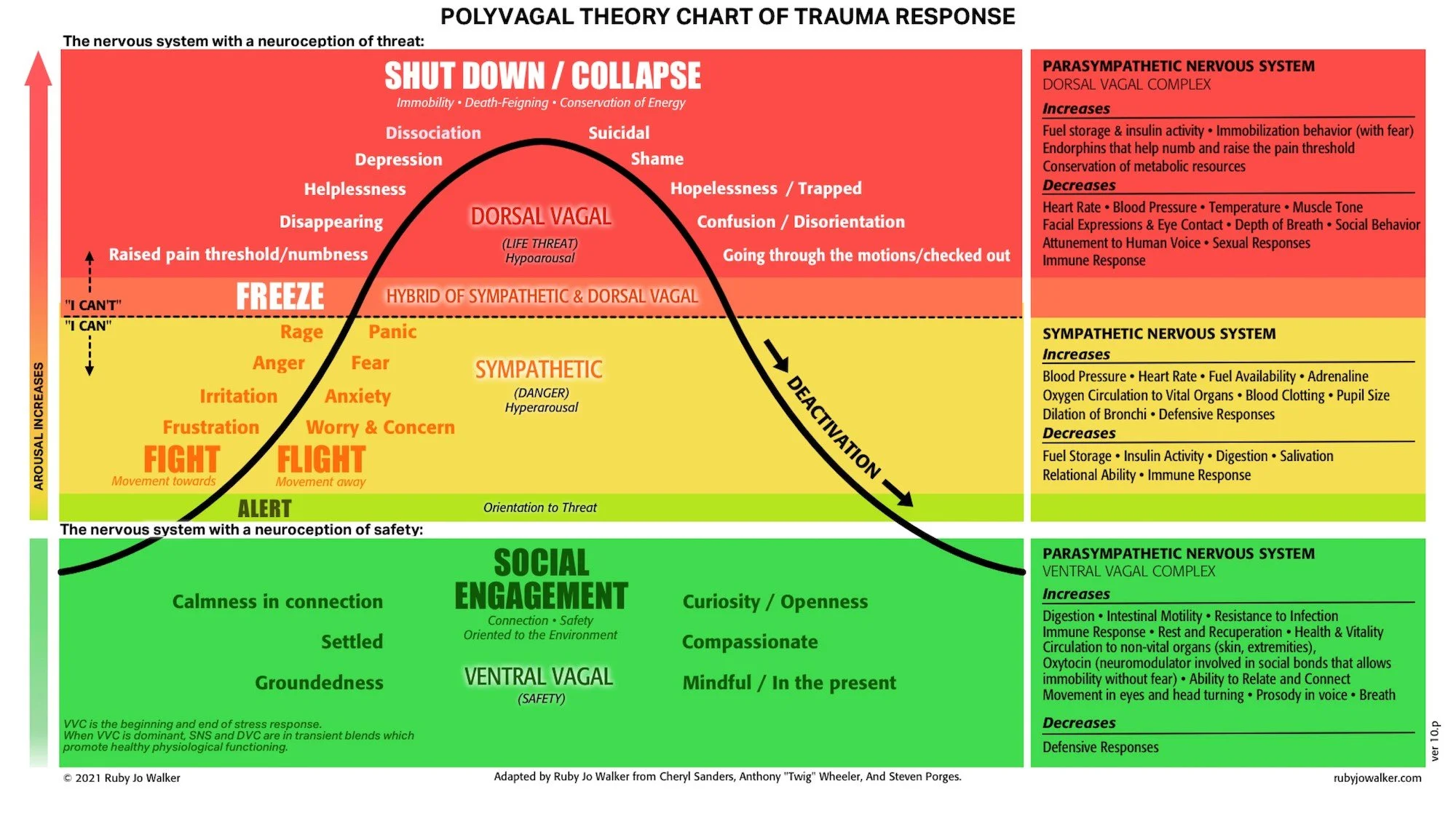
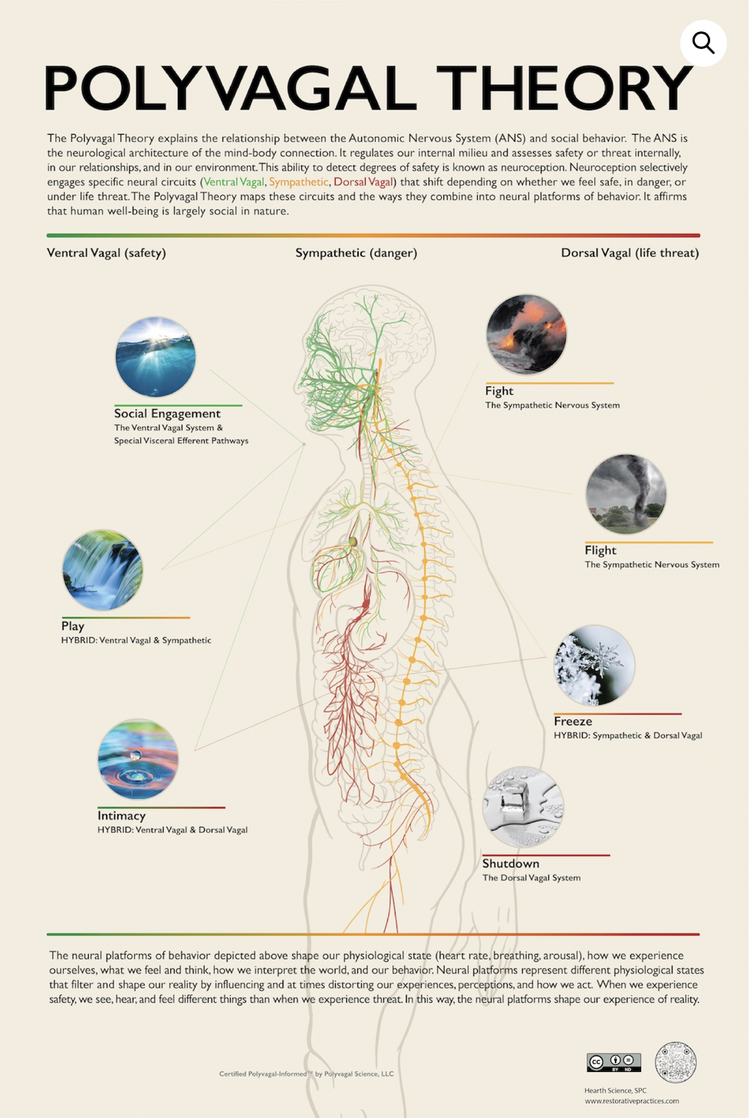
At the core of Polyvagal Theory is the idea that the autonomic nervous system operates through three primary states:
- Ventral Vagal (Social Engagement): This is the state of safety, where we feel connected, calm, and able to engage with others. It’s the most evolved response and allows for communication, play, and cooperation.
- Sympathetic (Mobilization/Fight/Flight): When we sense danger, the sympathetic nervous system kicks in, preparing the body to either confront or flee from the threat. This state is essential for survival but can become overwhelming if it’s activated too often.
- Dorsal Vagal (Immobilization/Freeze/Shutdown): This is the most primitive state, where the body shuts down in response to extreme danger. It’s often associated with dissociation, numbness, or feeling “stuck.”
Understanding these states helps us recognize how our bodies react to stress and how we can shift into more regulated, safe states.
Practical Applications in Therapy

Therapists who work with trauma survivors have found Polyvagal Theory to be an invaluable tool. By understanding the nervous system’s responses, they can create interventions that help clients move from states of fear and disconnection to ones of safety and connection.
Grounding and Breathwork
One of the most effective ways to regulate the nervous system is through grounding techniques and breathwork. Deep, slow breathing activates the vagus nerve, which helps bring the body back to a state of calm. Techniques like diaphragmatic breathing or the 4-7-8 method (inhale for 4 seconds, hold for 7, exhale for 8) can be powerful tools for managing anxiety and stress.
Therapeutic Relationship
The therapeutic relationship itself acts as a cue of safety. When a client feels seen, heard, and understood, their nervous system begins to relax. This is why trust and attunement are so crucial in therapy. A therapist who mirrors a client’s emotions, uses gentle eye contact, and maintains a calm presence can help the client feel safe enough to explore difficult memories or feelings.
Somatic Cues
Somatic cues—such as eye contact, prosody (the rhythm and tone of speech), and body posture—can also be used to regulate the nervous system. These nonverbal signals help the brain interpret safety, even when words might not be enough.
Real-Life Examples and Case Studies

Take the case of Elena, a 42-year-old woman who had experienced childhood trauma. She often froze when confronted with triggers, which left her feeling powerless and disconnected. Through polyvagal-informed therapy, she learned to use breathing exercises, humming, and gentle relational attunement to restore a sense of safety. Over time, she began to feel more present and engaged, allowing her to process her past without being overwhelmed by it.
This kind of approach isn’t just for trauma survivors. Anyone dealing with anxiety, depression, or chronic stress can benefit from understanding their nervous system and learning how to regulate it.
Integration With Other Therapies
Polyvagal Theory doesn’t exist in isolation—it can be integrated with other therapeutic modalities to enhance their effectiveness.
EMDR (Eye Movement Desensitization and Reprocessing)
EMDR is a powerful therapy for trauma, but it can be overwhelming if the nervous system isn’t regulated first. Polyvagal-informed techniques like breathing and grounding can be used before and after EMDR sessions to ensure the client stays in a safe state.
DBT (Dialectical Behavior Therapy)
DBT focuses on emotion regulation and mindfulness. By incorporating polyvagal principles, therapists can help clients better understand their physiological responses and develop skills to reduce sympathetic arousal.
IFS (Internal Family Systems)
IFS works with different parts of the self, and Polyvagal Theory can help clients understand how different parts of their nervous system respond to stress. This can deepen the healing process by fostering self-to-part connection and compassion.
Daily Life Applications

While Polyvagal Theory has strong roots in clinical practice, its principles can also be applied in everyday life. Here are some practical ways to use it:
- Practice deep breathing throughout the day to stay grounded.
- Engage in mindful physical activity, such as yoga or walking, to stimulate the vagus nerve.
- Use vocalizations like humming or singing to activate the social engagement system.
- Create a calming environment with soft lighting, nature sounds, or aromatherapy.
- Reminisce on pleasant memories to trigger the release of oxytocin, the “feel-good” hormone.
These simple practices can help you stay more regulated and resilient in the face of stress.
Conclusion
Polyvagal Theory offers a powerful lens through which to understand the body’s responses to stress, trauma, and safety. Its practical applications extend far beyond the therapy room, influencing how we manage our emotions, build relationships, and care for our well-being. By recognizing the three states of the nervous system and learning how to shift between them, we can cultivate greater resilience, connection, and peace in our lives.
Whether you’re a mental health professional, someone navigating personal challenges, or simply curious about how the body and mind work together, Polyvagal Theory provides valuable insights that can transform your understanding of yourself and others. Embracing this knowledge is not just about healing—it’s about thriving.

Post a Comment for "Understanding Polyvagal Theory: Practical Applications for Mental Health and Wellbeing"
Post a Comment