The Best Foods to Optimize Your Menstrual Cycle for Better Health
Your menstrual cycle is more than just a monthly event—it’s a complex interplay of hormones, energy levels, and nutritional needs. For many women, understanding how to support their bodies through this natural process can lead to improved well-being, reduced symptoms, and better overall health. One way to do this is by focusing on menstrual cycle optimization foods—nutrient-dense choices that align with the unique demands of each phase of your cycle.
This article will explore how food can be a powerful tool in managing your menstrual cycle, backed by science and expert insights. Whether you're looking to ease cramps, boost energy, or simply feel more balanced, the right diet can make a significant difference.
What Is Cycle Syncing?

Cycle syncing is the practice of adjusting your lifestyle—including your diet—based on the four phases of your menstrual cycle: menstrual, follicular, ovulatory, and luteal. Each phase is characterized by distinct hormonal changes, which can influence your energy, mood, and nutritional needs.
For example, during the menstrual phase, estrogen and progesterone are at their lowest, while in the follicular phase, estrogen rises, increasing energy and metabolic activity. The ovulatory phase is marked by peak estrogen and testosterone, and the luteal phase sees a rise in progesterone, which can affect appetite and mood.
While there's no one-size-fits-all approach, many experts agree that paying attention to these shifts and adjusting your diet accordingly can help you feel more in tune with your body.
Why Focus on Food During Your Cycle?

Your body undergoes significant changes throughout your menstrual cycle, and these changes can impact your nutritional requirements. For instance:
- During menstruation, you may lose iron and fluids, so foods rich in iron and hydration become essential.
- In the follicular phase, as estrogen rises, your metabolism becomes more efficient, and you may feel more energetic.
- At ovulation, your body is preparing for potential pregnancy, so supporting this process with nutrient-rich foods is key.
- In the luteal phase, increased progesterone can lead to cravings and mood swings, making balanced meals even more important.
By choosing the right foods for each phase, you can support your body’s natural rhythms and potentially reduce discomfort.
Key Foods to Support Each Phase
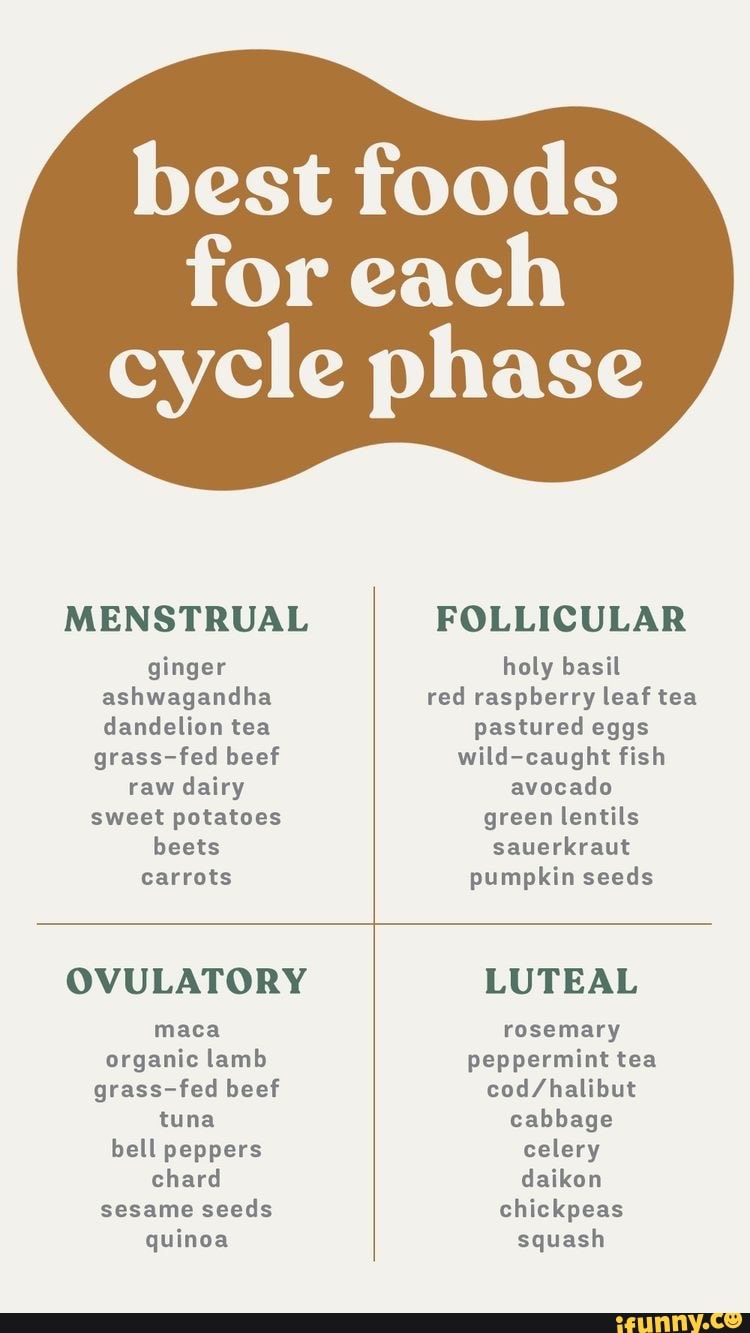
Here are some of the best foods to incorporate into your diet based on where you are in your cycle:
1. Menstrual Phase
During this time, focus on iron-rich foods to replenish what you’ve lost and anti-inflammatory foods to ease cramps.
- Leafy greens (spinach, kale) – high in iron and magnesium
- Lean meats (chicken, turkey) – good sources of protein and iron
- Fruits (strawberries, oranges) – vitamin C helps with iron absorption
- Ginger – natural anti-inflammatory that can ease cramping
- Dark chocolate – contains magnesium, which can help with mood and pain
2. Follicular Phase
As your energy and metabolism increase, focus on protein and healthy fats to fuel your body.
- Fish (salmon, sardines) – rich in omega-3s and protein
- Nuts and seeds (walnuts, chia seeds) – provide healthy fats and fiber
- Whole grains (quinoa, oats) – offer sustained energy
- Cruciferous vegetables (broccoli, Brussels sprouts) – support liver function and hormone balance
3. Ovulatory Phase
This is a high-energy phase, so prioritize complex carbohydrates and lean proteins.
- Legumes (lentils, chickpeas) – high in fiber and protein
- Eggs – rich in vitamins and minerals
- Fruits (apples, bananas) – provide natural sugars for energy
- Healthy fats (avocados, olive oil) – support hormone production
4. Luteal Phase
With rising progesterone, focus on magnesium-rich foods and complex carbs to stabilize blood sugar.
- Pumpkin seeds – high in magnesium
- Dark leafy greens (kale, spinach) – also rich in magnesium
- Sweet potatoes – provide slow-releasing energy
- Yogurt – probiotics support gut health, which is linked to hormonal balance
What to Avoid During Your Cycle
While certain foods can support your cycle, others may exacerbate symptoms. Here are some foods to limit or avoid:
- Salty foods – can worsen bloating
- Sugary foods – cause blood sugar spikes and crashes
- Red meat – linked to increased risk of endometriosis
- Spicy foods – may irritate the digestive system
- Highly processed foods – often high in salt, fat, and sugar
- Caffeine – can increase anxiety and cramping
- Alcohol – dehydrates the body and worsens symptoms
The Science Behind Cycle Syncing

While the concept of cycle syncing has gained popularity, the scientific evidence behind it is still evolving. Experts like Dr. Rhea Rogers and Dr. Christina Pramudji emphasize that while there are hormonal shifts, the idea of "balancing" hormones through diet is not fully supported by clinical research.
However, they do agree that eating a balanced, nutrient-rich diet consistently is more important than trying to follow strict phase-specific meal plans. Diets like the Mediterranean diet, which emphasizes whole foods, healthy fats, and lean proteins, are often recommended as a solid foundation for hormonal health.
Dr. Carly Duffy, a registered dietitian, notes that while cycle syncing can be a helpful tool, it shouldn’t replace a well-rounded approach to nutrition. “Eating an overall balanced, nutrient-rich diet is key for healthy hormone metabolism,” she says.
Final Thoughts
Menstrual cycle optimization foods can play a vital role in supporting your body’s natural rhythms and improving your overall well-being. While the science is still developing, many women find that paying attention to their dietary needs during different phases of their cycle leads to fewer symptoms and better energy levels.
Whether you choose to follow a structured cycle-syncing plan or simply make small adjustments to your diet, the goal is to listen to your body and nourish it in ways that feel sustainable and supportive. By making informed choices about what you eat, you can take control of your health and feel more in tune with your menstrual cycle.
Remember, every woman’s body is unique, and what works for one person may not work for another. The key is to stay consistent, stay informed, and most importantly, trust your body’s signals. With the right approach, food can be a powerful ally in optimizing your menstrual cycle and enhancing your quality of life.

Post a Comment for "The Best Foods to Optimize Your Menstrual Cycle for Better Health"
Post a Comment